
The Sky This Week, June 15 - June 21, 2026
Author
Rishabh Nakra
Date Published
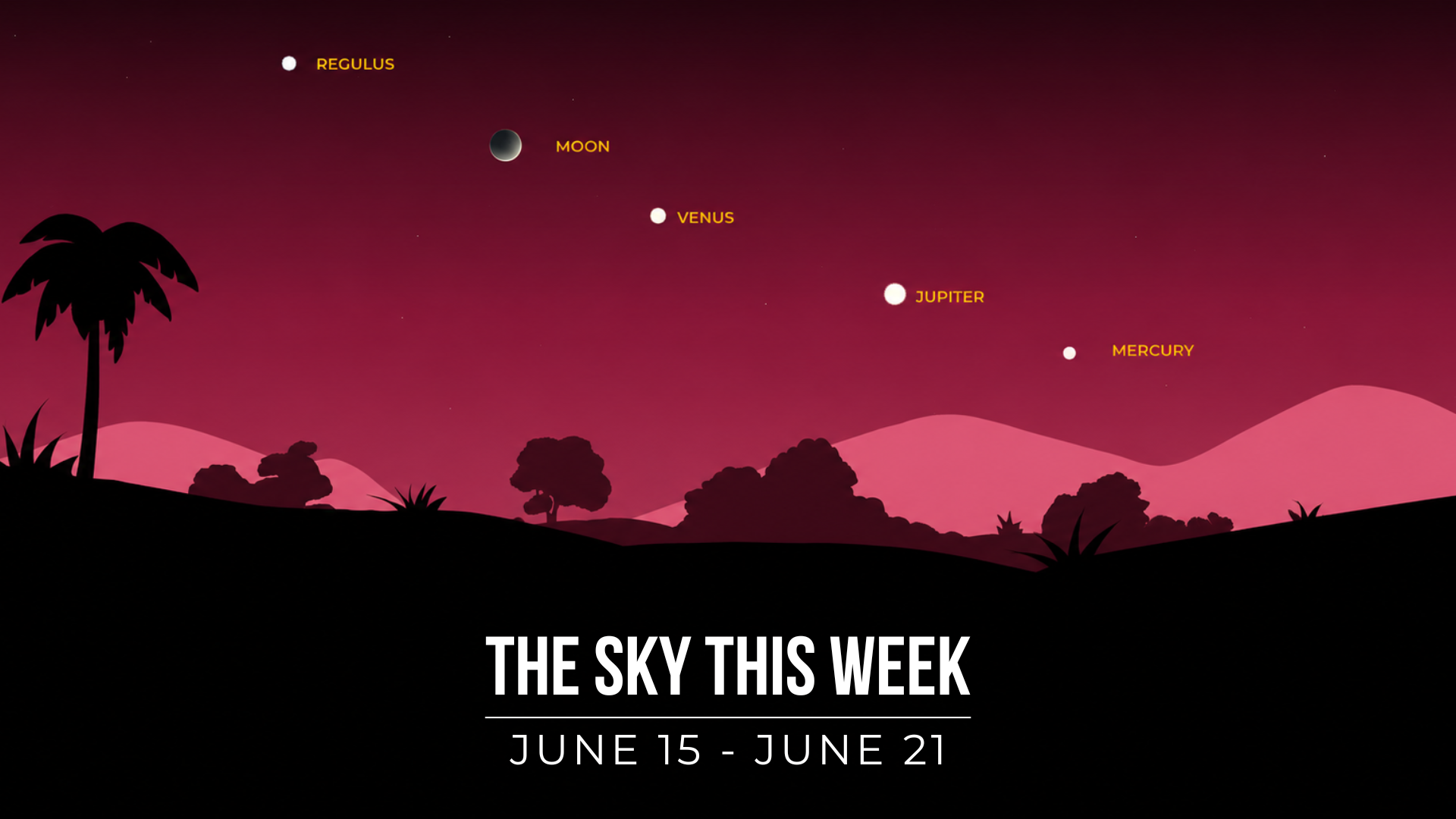
This is the week the western twilight earns your full attention.
Mercury climbs to its highest evening perch of the season on June 15, the same day a Super New Moon resets the lunar cycle. Within two days, a razor-thin crescent Moon sweeps up past Mercury, Jupiter, and Venus, even hiding Venus in broad daylight for observers in the Americas.
Then comes June 18, when five bright objects fall into a single line climbing away from the horizon. The week closes with the solstice, the longest day of the year north of the equator. Here's what to look for, night by night.
Read the full sky report of June 2026 here.
June 15 — Mercury at Greatest Eastern Elongation, and a Super New Moon
Mercury spends most of its life drowned in the Sun's glare, which is why even seasoned skywatchers go years without seeing it. Tonight it gets as much breathing room as this apparition allows. The planet reaches greatest eastern elongation, 24.5 degrees from the Sun, its highest point above the horizon in the evening sky.
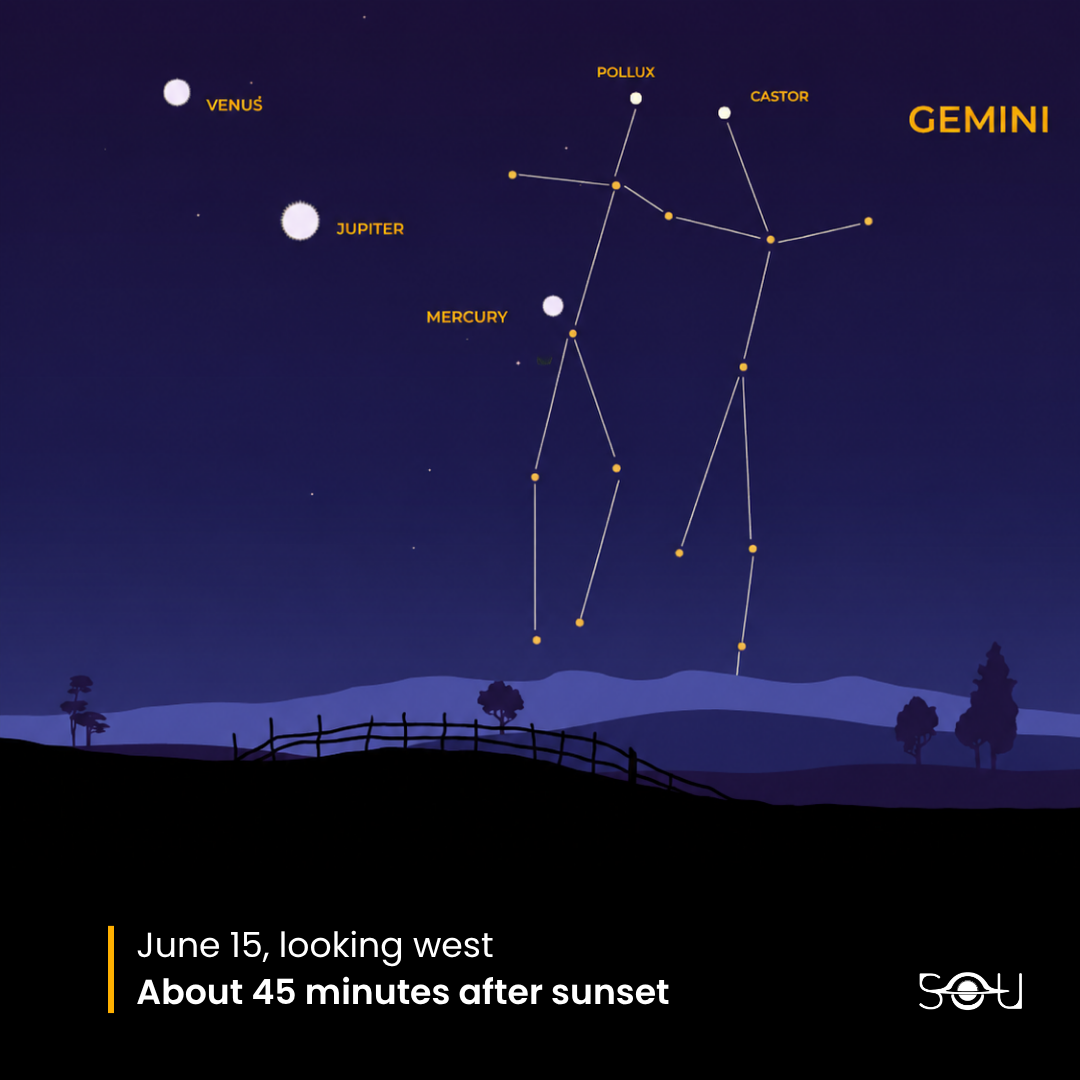
Find a flat western horizon, wait about 40 minutes after sunset, and look for a steady, slightly amber point of light well below brilliant Venus and Jupiter. Binoculars help you pick it out of the twilight, but once found, it holds with the naked eye
The Moon, meanwhile, is nowhere to be seen, and that's the second event. The Sun, Moon, and Earth line up on June 15 with the New Moon only 357,218 kilometers from our planet, making it a Super New Moon.
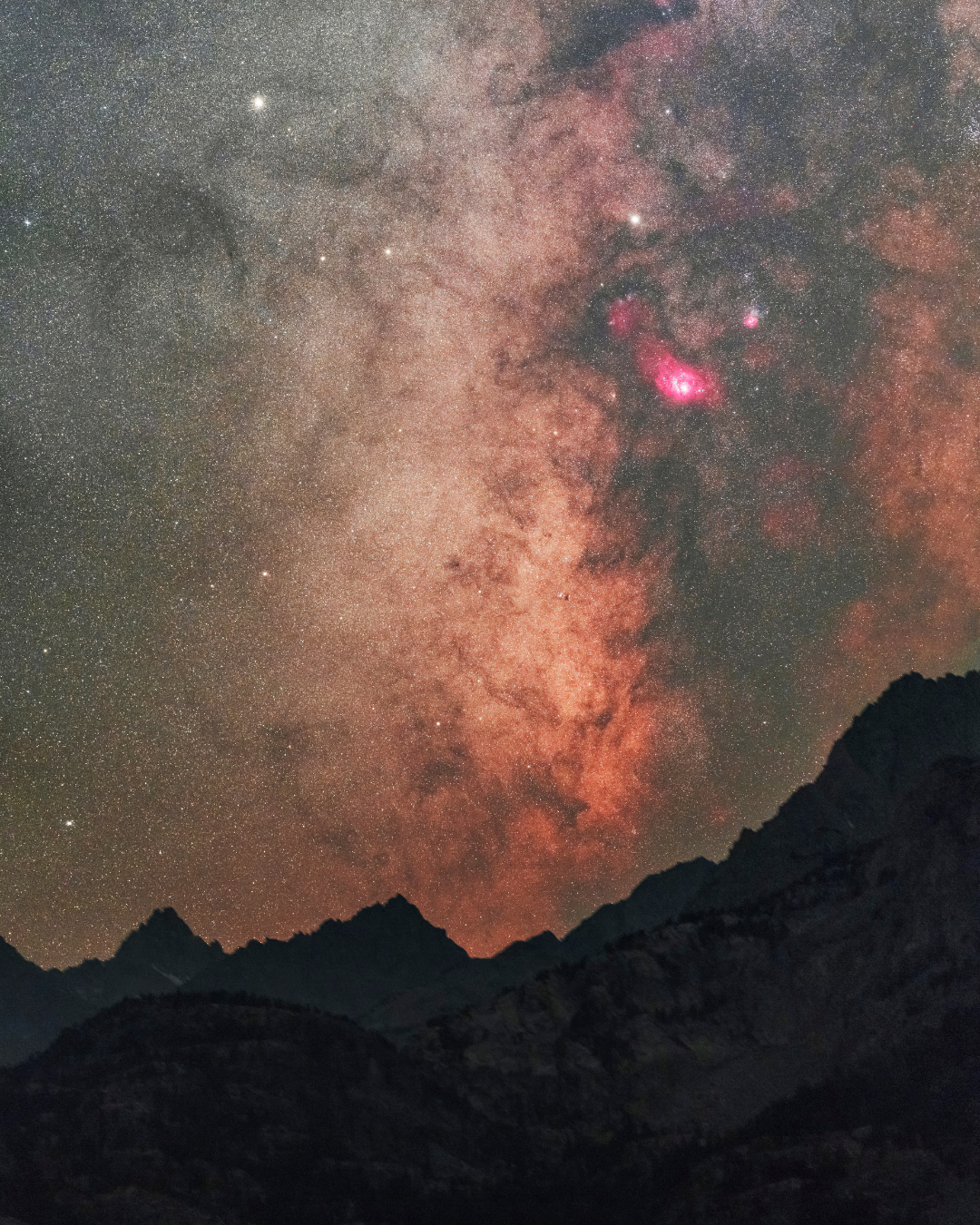
Central core of the Milky Way. The Lagoon nebula (red) is at right. The Milky Way is our galaxy seen from the inside.
You can't observe a new Moon, but its absence is a gift: these are the darkest nights of the month. If you've been waiting to hunt the summer Milky Way rising in the east after midnight, or the globular cluster M13 in Hercules overhead, this is your window. For deep-sky observers, there's a bonus target: asteroid 14 Irene reaches opposition today, a telescope object gliding through the southern sky all night.
June 16 — The Crescent Moon Enters the Planet Parade
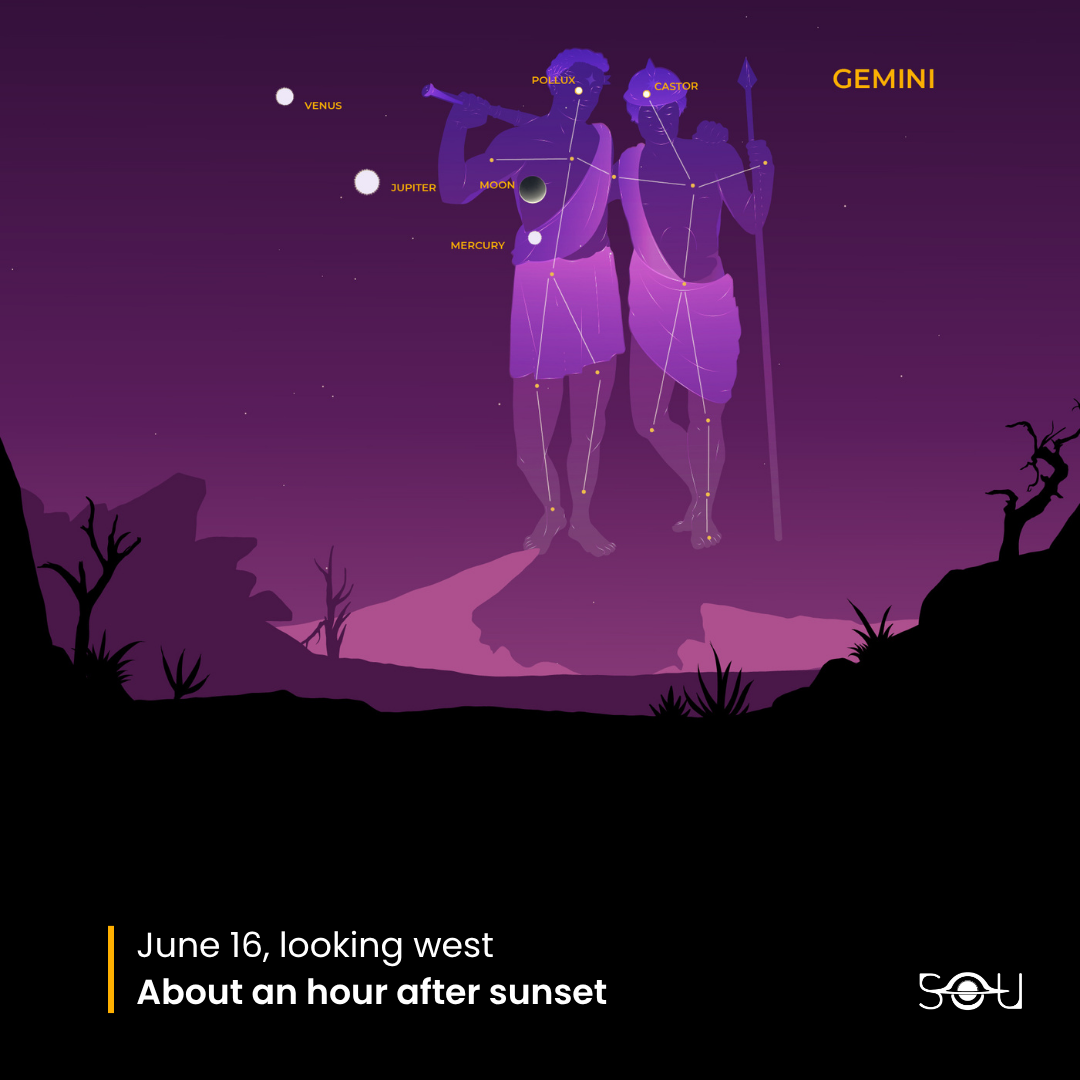
Barely a day old at sunset for most longitudes, the Moon returns as the thinnest of slivers low in the west-northwest.
Once the waxing crescent emerges in the evening sky, it swings past Mercury, then Jupiter, and then Venus, each night through the 18th. Tonight it hangs near Mercury, a delicate pairing that rewards anyone with an unobstructed horizon. Look for earthshine too, the ghostly glow of the Moon's night side lit by sunlight reflecting off Earth's oceans and clouds.
Spotting a Moon this young is a minor sport among observers; catch it within 24 hours of new and you've done something most people never have.
June 17 — The Moon Occults Venus in Daylight
The headline act for the Americas happens while the Sun is still up. The Moon passes in front of Venus, creating a lunar occultation visible from regions including the contiguous United States, Canada, Brazil, and Venezuela.

Venus is bright enough to see in daytime, especially with the crescent Moon as a signpost beside it. One serious caution applies: do not point binoculars, a telescope, or a camera near the Sun unless you're using proper solar safety equipment, as looking at or near the Sun through optics can cause serious eye injury.
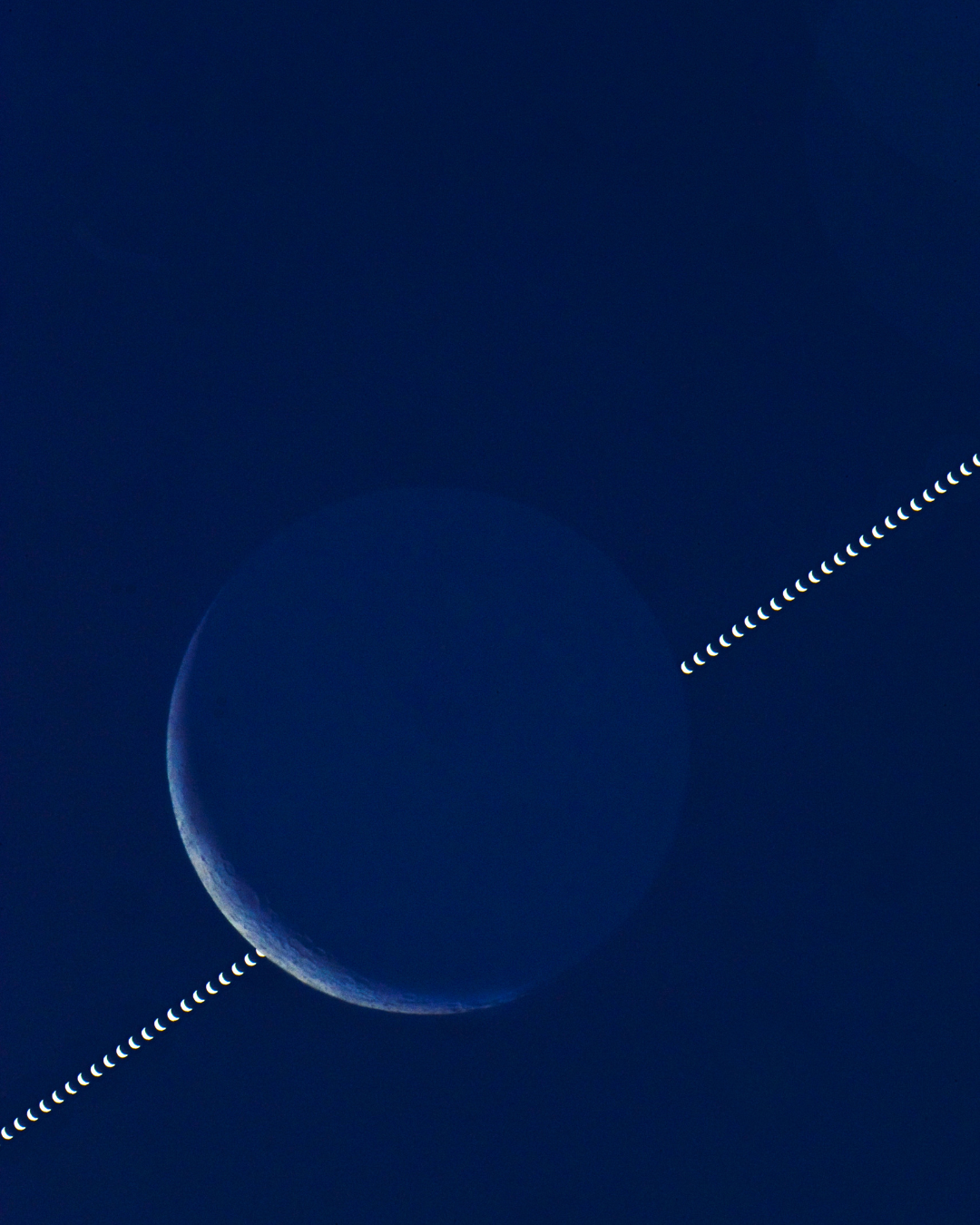
Lunar occultation of Venus, time-lapse image. Photographed from southern California, USA, on the morning of 22 April 2009.
Observers in Asia, Europe, and elsewhere outside the occultation path don't go home empty-handed. After sunset, the crescent Moon stands close beside Venus in the west, with Jupiter below and Mercury hugging the horizon. It's the tightest Moon-and-planets grouping of the month, and no equipment is needed at all.
June 18 — Five Celestial Bodies in a Line
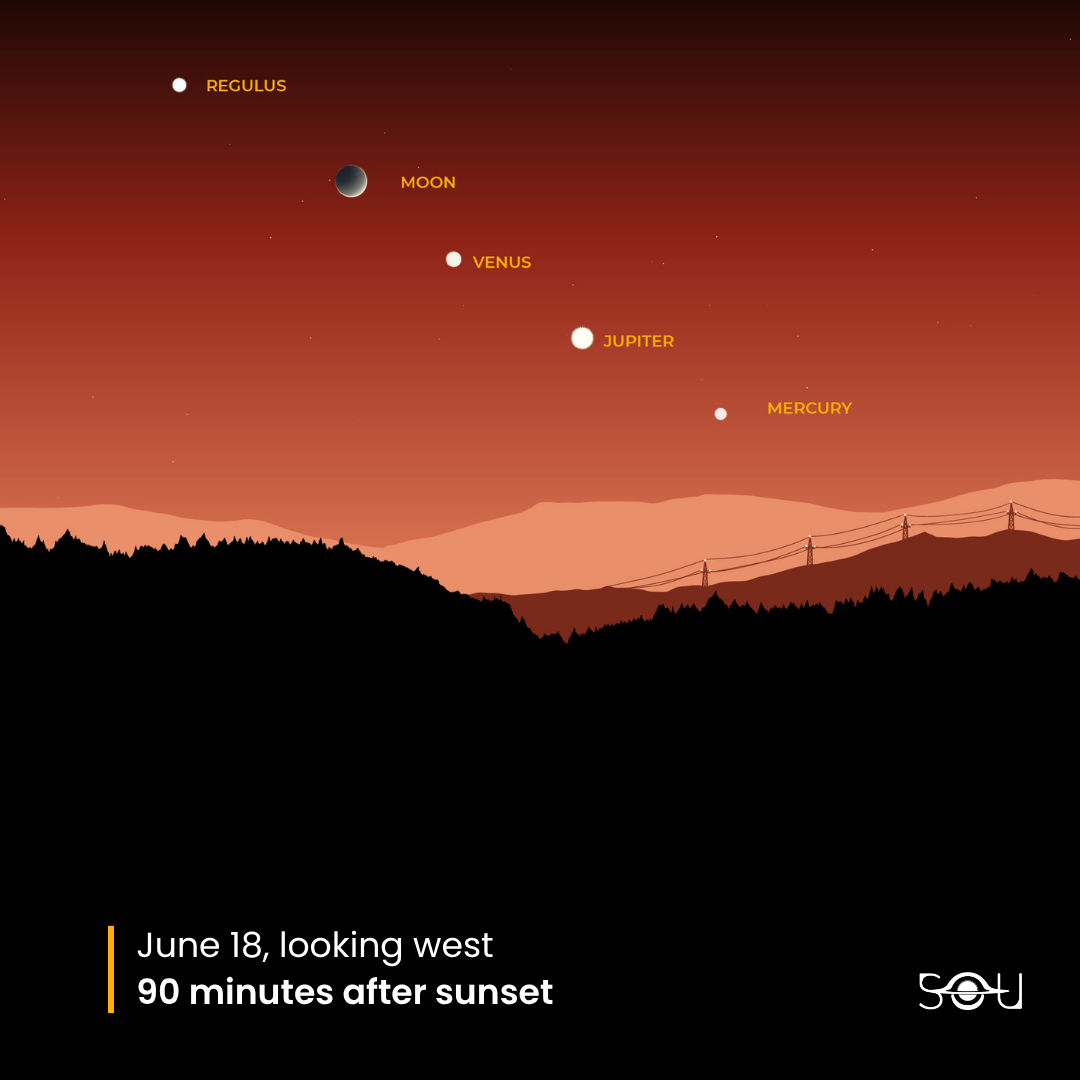
Mercury, Jupiter, Venus, Moon, and Regulus line up in the western dusk sky on June 18, 2026
This is the evening to clear your schedule.
After sunset, five objects fall into a rough line climbing away from the horizon: Mercury lowest and fading, near Pollux; then Jupiter; then dazzling Venus, sitting near the Beehive Cluster in Cancer; then the waxing crescent Moon; and finally Regulus, the brightest star in Leo, anchoring the top.
From Regulus down to Mercury, the five bright celestial bodies span nearly 40 degrees of sky, a chain four fist-widths long at arm's length.
June 19 — The Moon Meets Regulus, Venus Brushes the Beehive
The Moon keeps climbing eastward and tonight reaches the heart of Leo. The Moon passes 0.3 degrees south of Regulus at 11 A.M. EDT, and by evening sits to the upper left of the bright star in the west after sunset. Regulus marks the base of the Sickle, the backward question mark that forms the Lion's head, and the 31-percent crescent beside it is bright enough to cast faint shadows from a dark site.
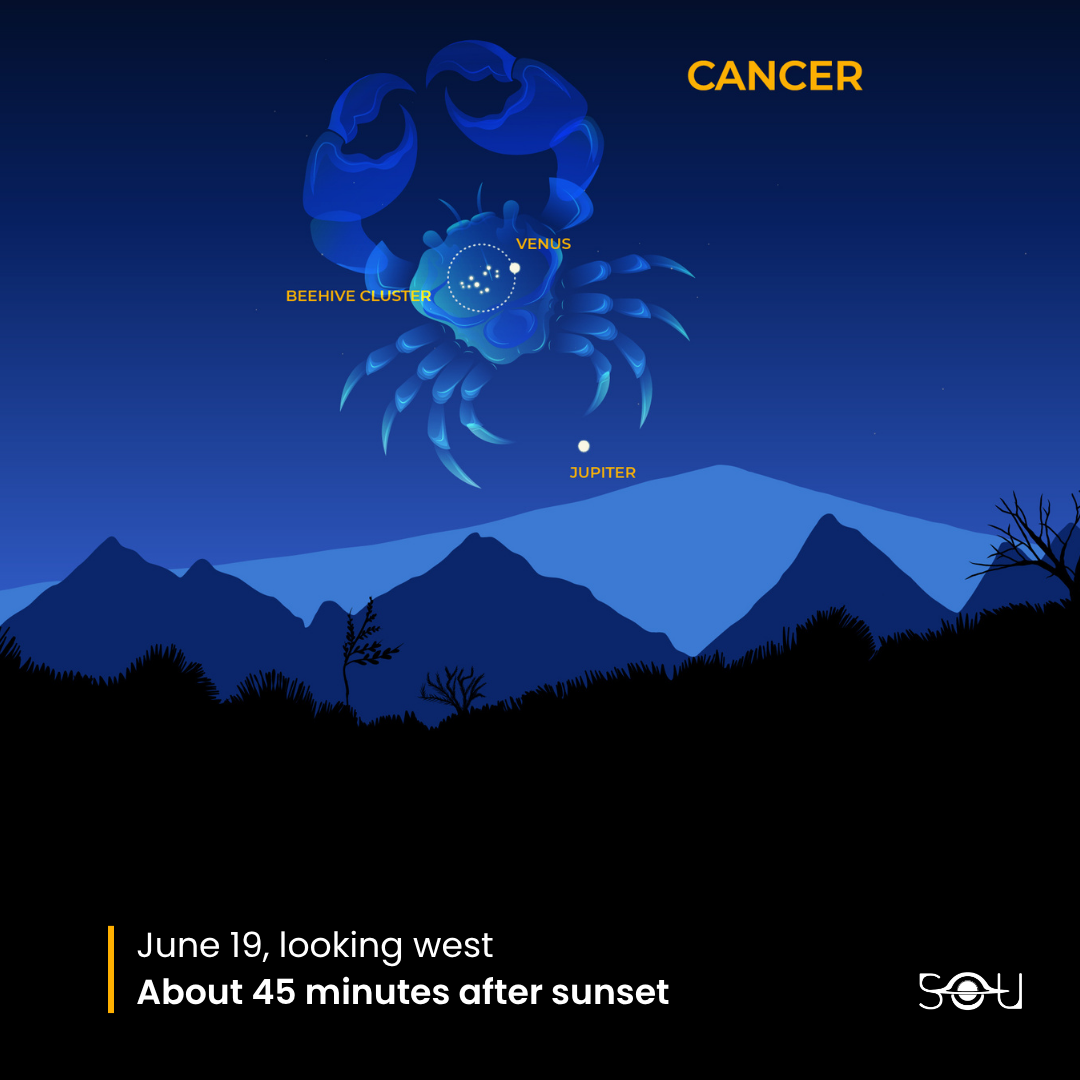
Lower down, a quieter spectacle plays out. Use a binocular to see Venus 0.8 degrees above the Beehive star cluster, the swarm of stars also known as M44 or the Manger, about 600 light-years away in Cancer. The brightest planet hanging over a spray of cluster stars is one of June's finest binocular sights. Wait until twilight deepens so the fainter cluster members emerge.
June 20 — The Morning Shift: Saturn and Mars
With the Moon now bright enough to wash out the evening's subtler targets, turn to the predawn sky.
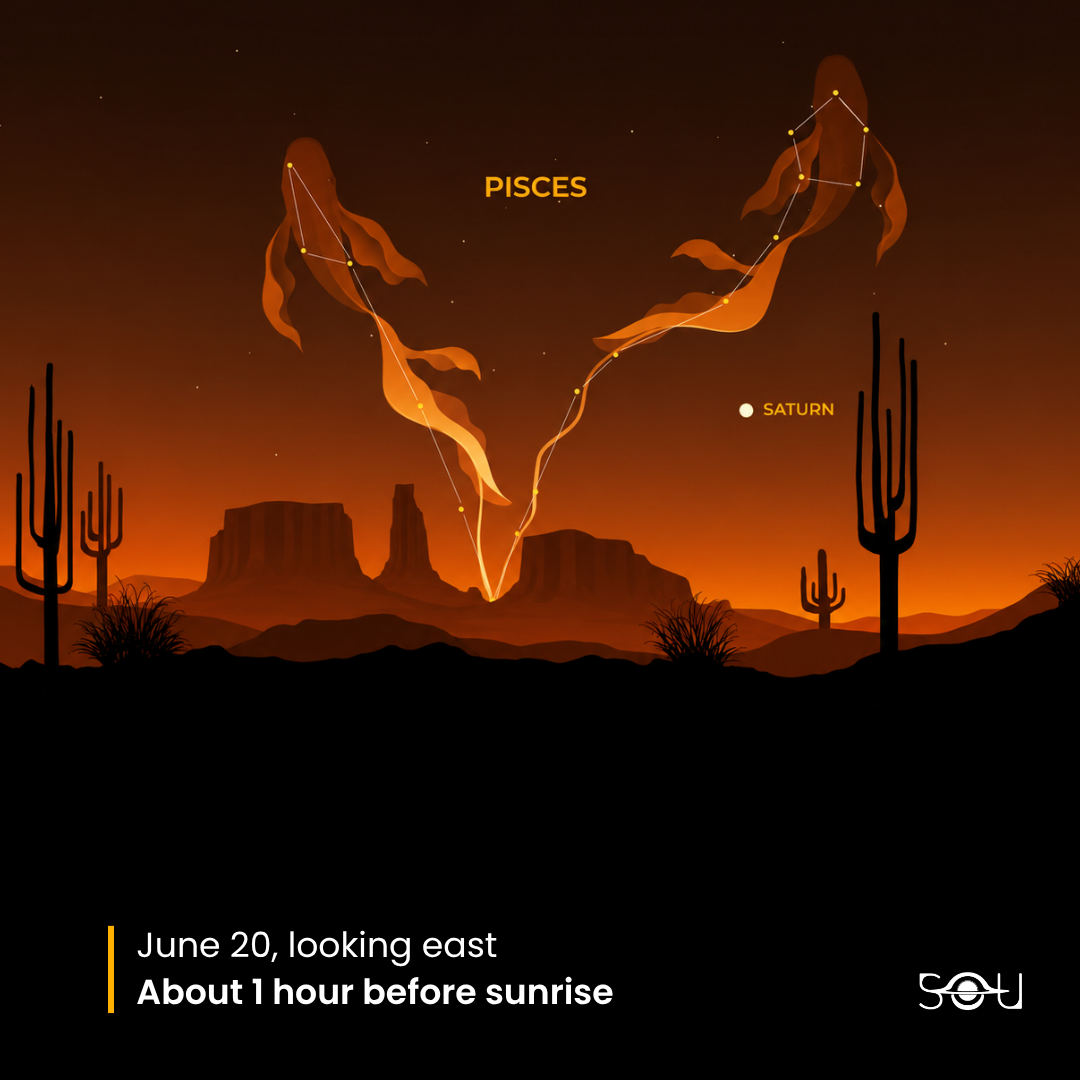
Yellowish Saturn is getting higher above the pre-dawn eastern horizon as the days pass, while reddish Mars sits low to the horizon below it. Saturn, drifting through Pisces, is comfortably placed an hour before sunrise and is worth a telescope look as its rings continue to open after last year's edge-on alignment.
Mars is the harder catch, a dim ember in the brightening east, but it's on its way to better things: Mars approaches the Pleiades before sunrise in the coming days, setting up a photogenic meeting with the star cluster.
June 21 — June Solstice
The solstice occurs at 08:25 UTC, when the North Pole tilts toward the Sun, which stands directly over the Tropic of Cancer at 23.44 degrees north latitude. This is the first day of summer in the Northern Hemisphere and the first day of winter in the Southern Hemisphere.
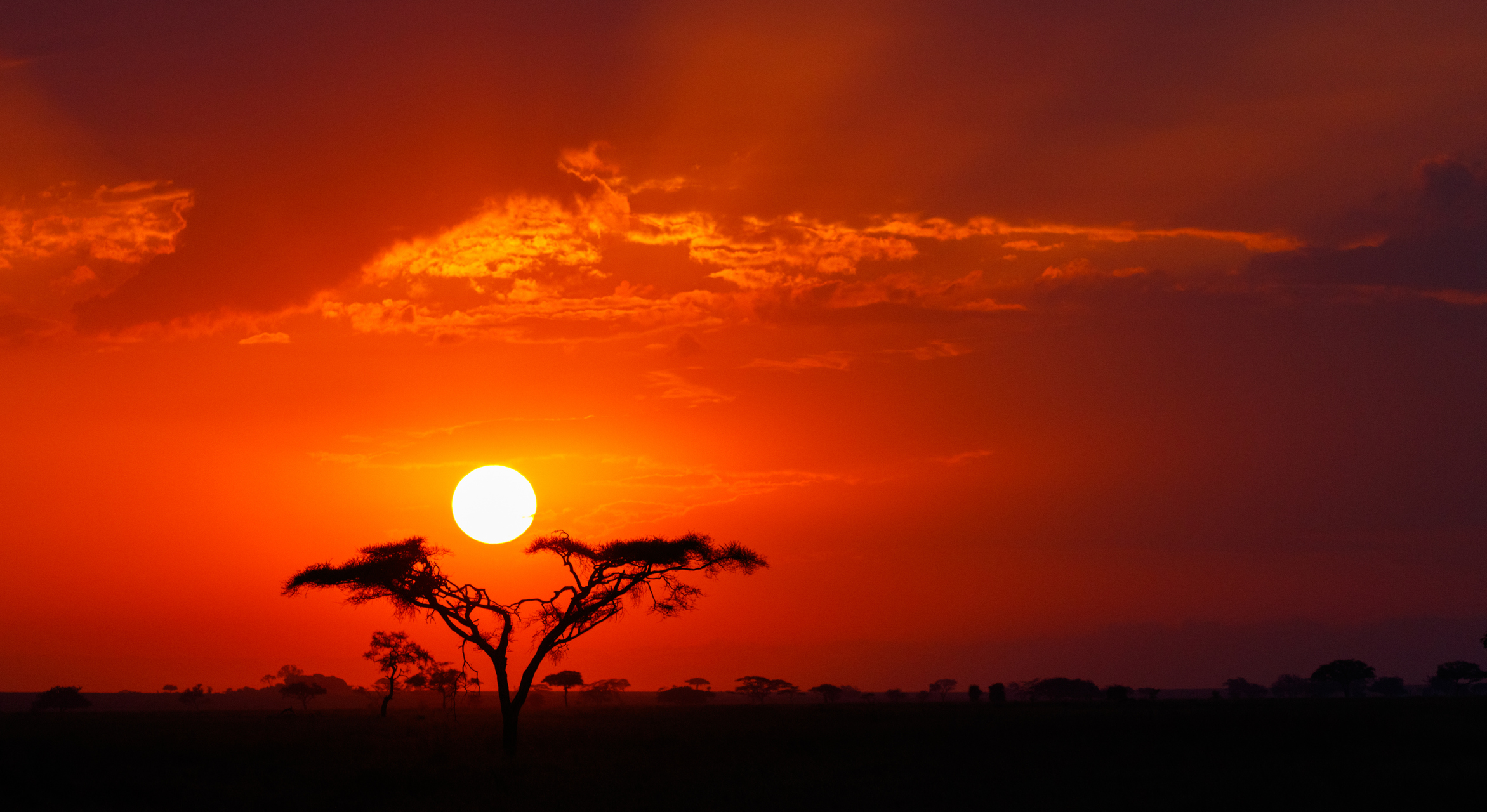
For places in the north, the Sun rises and sets at its northernmost points on the horizon and takes its longest, highest arc of the year. The price is the year's shortest night, but the trade has its compensations: noctilucent clouds, those electric-blue wisps at the edge of space, peak around the solstice for observers above roughly 45 degrees north. Look low in the north an hour or so after sunset.
The same evening, the Moon reaches first quarter, a half-lit globe ideal for picking out craters along the terminator with any small telescope.
Next week, Venus pulls away from the Beehive as Mercury slides back toward the Sun, the June Bootid meteors offer their unpredictable trickle on the 22nd, and the month builds toward its finale: the Strawberry Micromoon rising near the Teapot of Sagittarius on June 29.
Discover the top 5 astronomy apps that turn your smartphone into a powerful stargazing tool. From real-time sky maps to telescope control...

Venus meets Jupiter June 8 and 9, Mercury joins the evening planets, five objects line up on June 18, and a Strawberry micromoon ends the month.

Cassini data reveal complex organic molecules in Enceladus’ plumes, strengthening the case that Saturn’s icy moon may host the precursors of life.