
The Sky This Week, June 8 - June 14, 2026
Author
Rishabh Nakra
Date Published
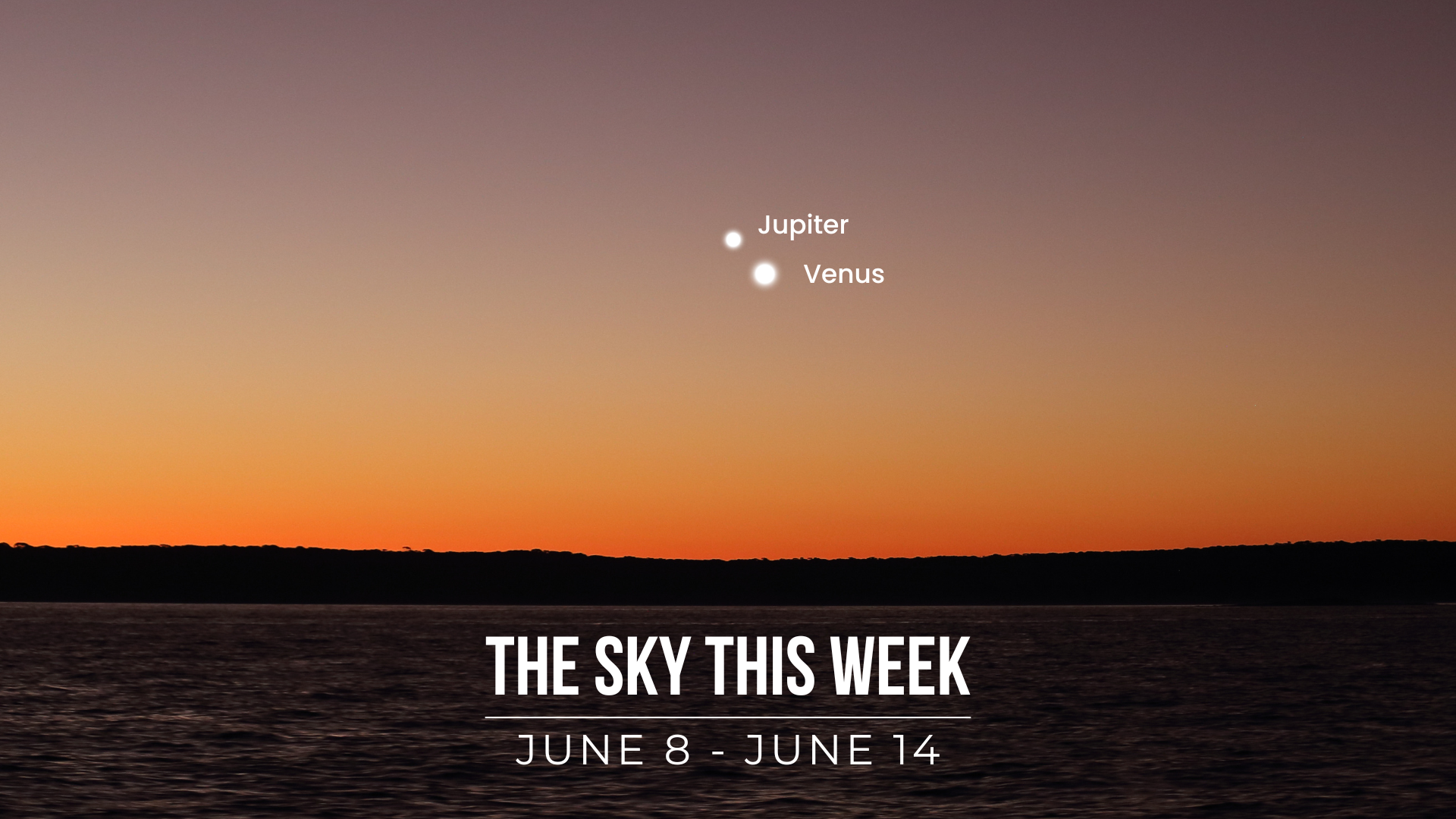
This is the week the long approach pays off.
On June 9, Venus and Jupiter draw to about a degree and a half apart in the western twilight, the two brightest planets in the sky nearly touching, with Mercury climbing into the scene below them. After that the pair starts to separate, Venus rising past Jupiter night after night while Mercury keeps gaining height toward its best evening showing of the year.
The mornings hold their own run of sights, as a thinning crescent Moon slides past Saturn and then Mars low in the east. And by the 13th, all five naked-eye planets are in play across a single night. Here is what to look for, night by night.
Read the full report on top night sky events in June 2026 here.
June 8 — The eve of the conjunction
The week opens with the two brightest planets almost on top of each other. Low in the west-northwest after sunset, Venus, near magnitude -4, sits about 2 degrees from Jupiter, around magnitude -2, the gap noticeably tighter than the night before.
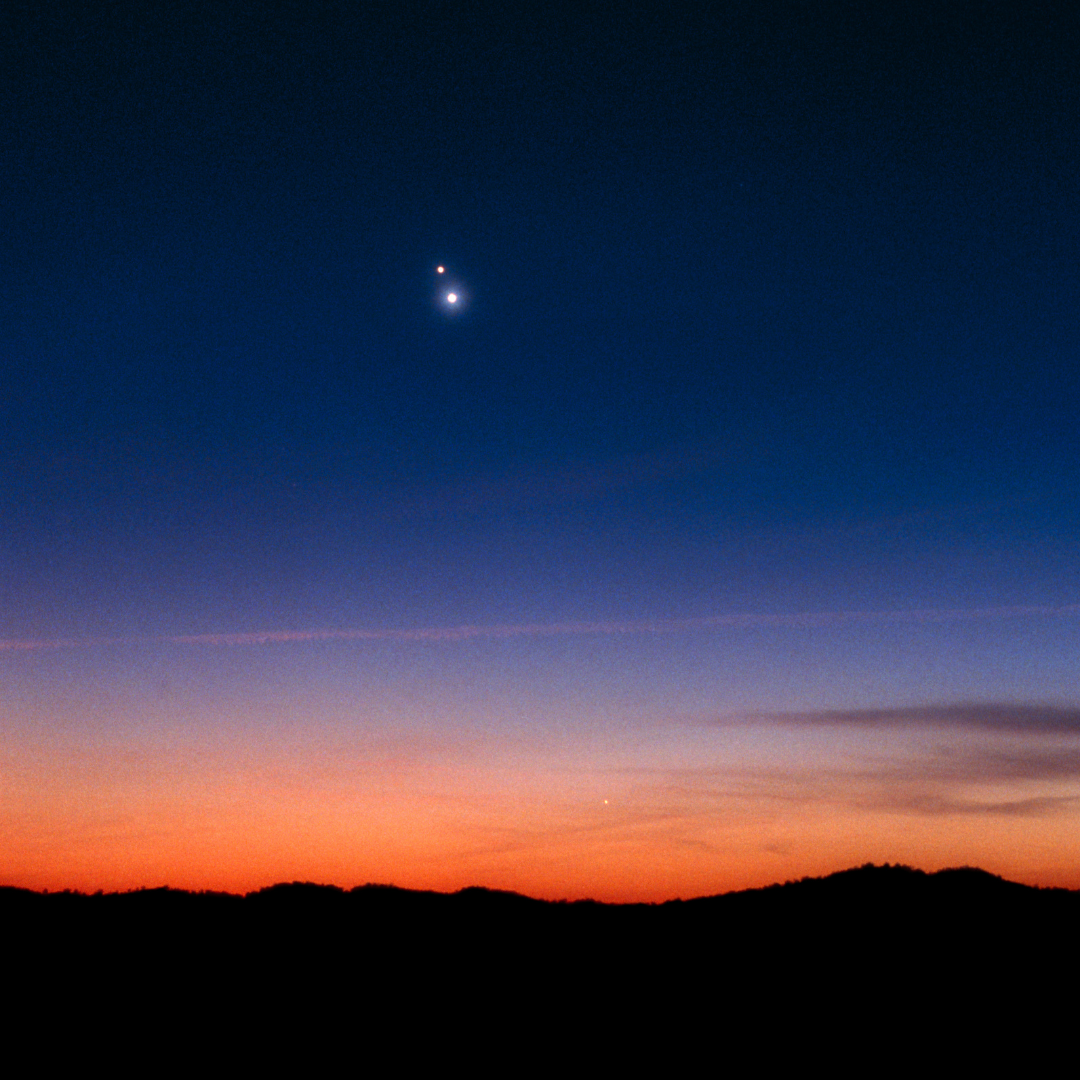
The conjunction of Jupiter and Venus on February 22, 1999, photographed from California, USA.
Venus is threading the narrow space between Jupiter and Pollux, the brighter of Gemini's twin stars. Mercury has climbed into the picture too, well below the bright pair and looking starlike rather than brilliant.
Earlier, before dawn, the Moon reached its Last Quarter, a clean half-disk that now begins to thin. Step out about 45 minutes after sunset and find an open western horizon. Tomorrow is the close.
June 9 — Venus meets Jupiter in Gemini
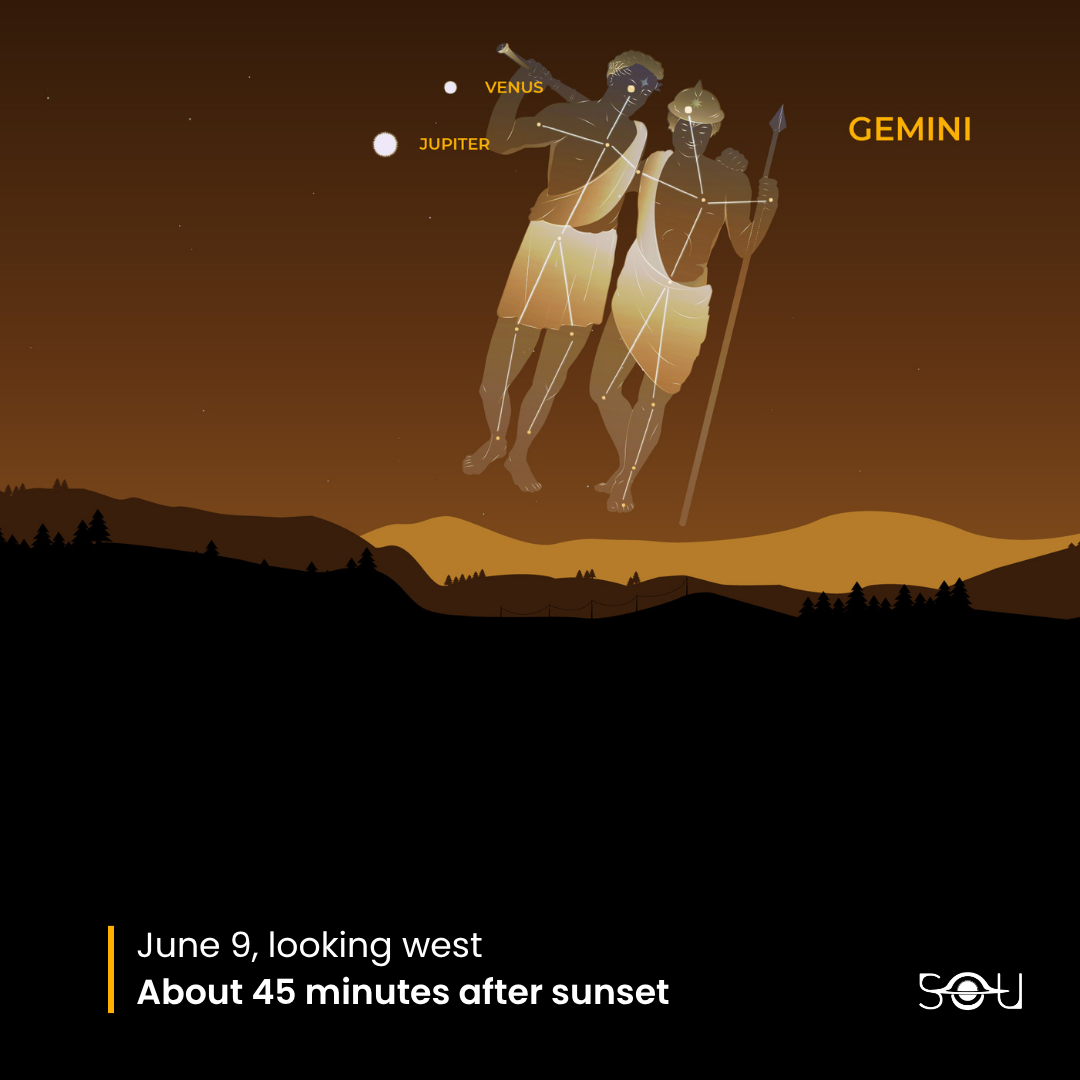
This is the night the approach has been building toward. Venus passes about 1.6 degrees to Jupiter's upper right, the two of them packed into a span narrower than your pinky finger held at arm's length, the sky's two brightest planets all but fused into a single bright knot.
Below and to the right, roughly 13 degrees down toward the horizon, Mercury completes a three-planet line that stretches about 14 degrees across the twilight. Start looking around 45 minutes after sunset, low in the west-northwest, and use the short window before they set.
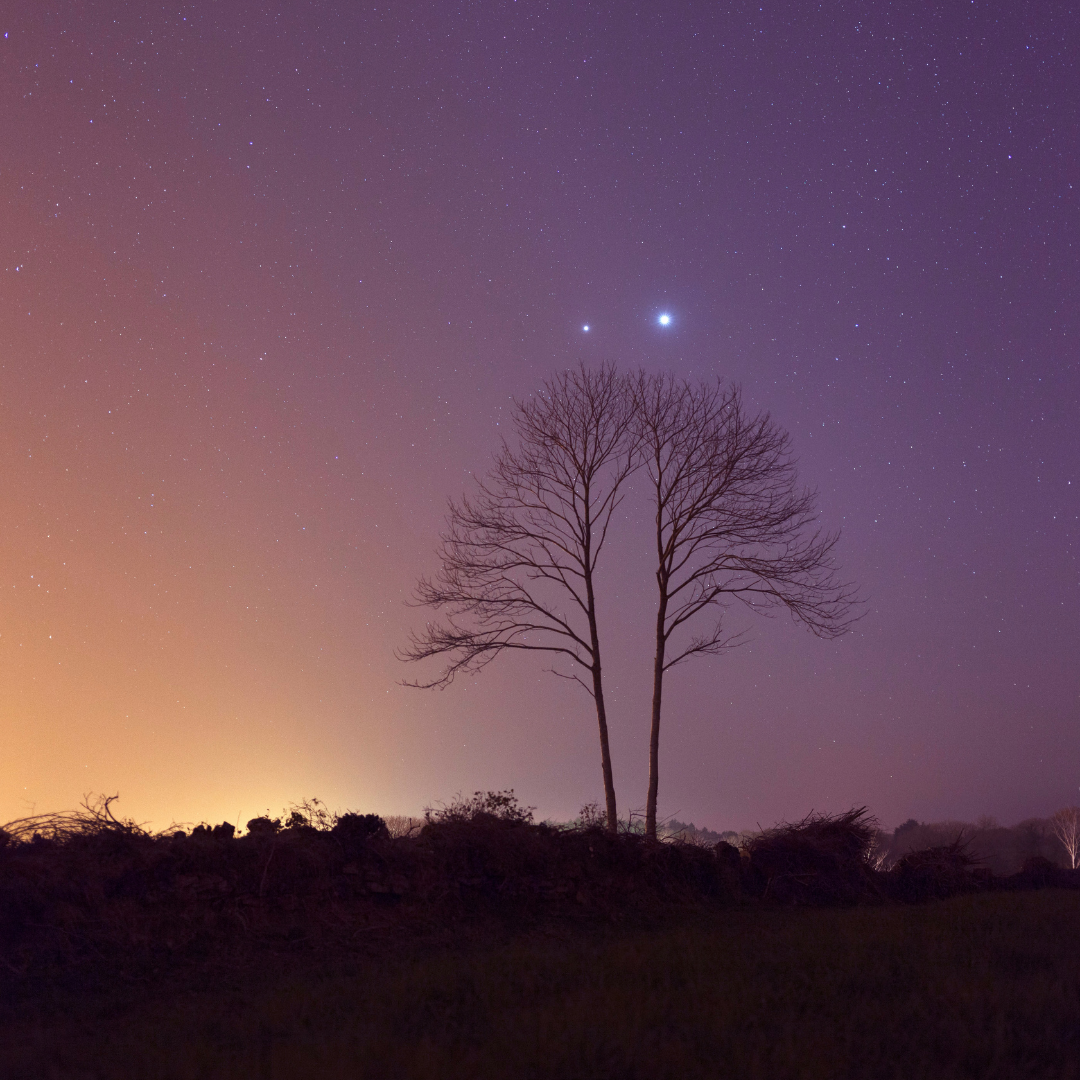
Jupiter-Venus conjunction photographed on March 12, 2012
The pairing is a trick of perspective. Jupiter lies nearly six times farther from us than Venus; the two only share a line of sight. Binoculars hold both planets in one view, and a low-power telescope shows Venus as a small gibbous disk beside Jupiter and its strung-out moons. From either hemisphere the sight is low, so a flat, unobstructed western horizon makes all the difference.
June 10 — The Moon calls on Saturn
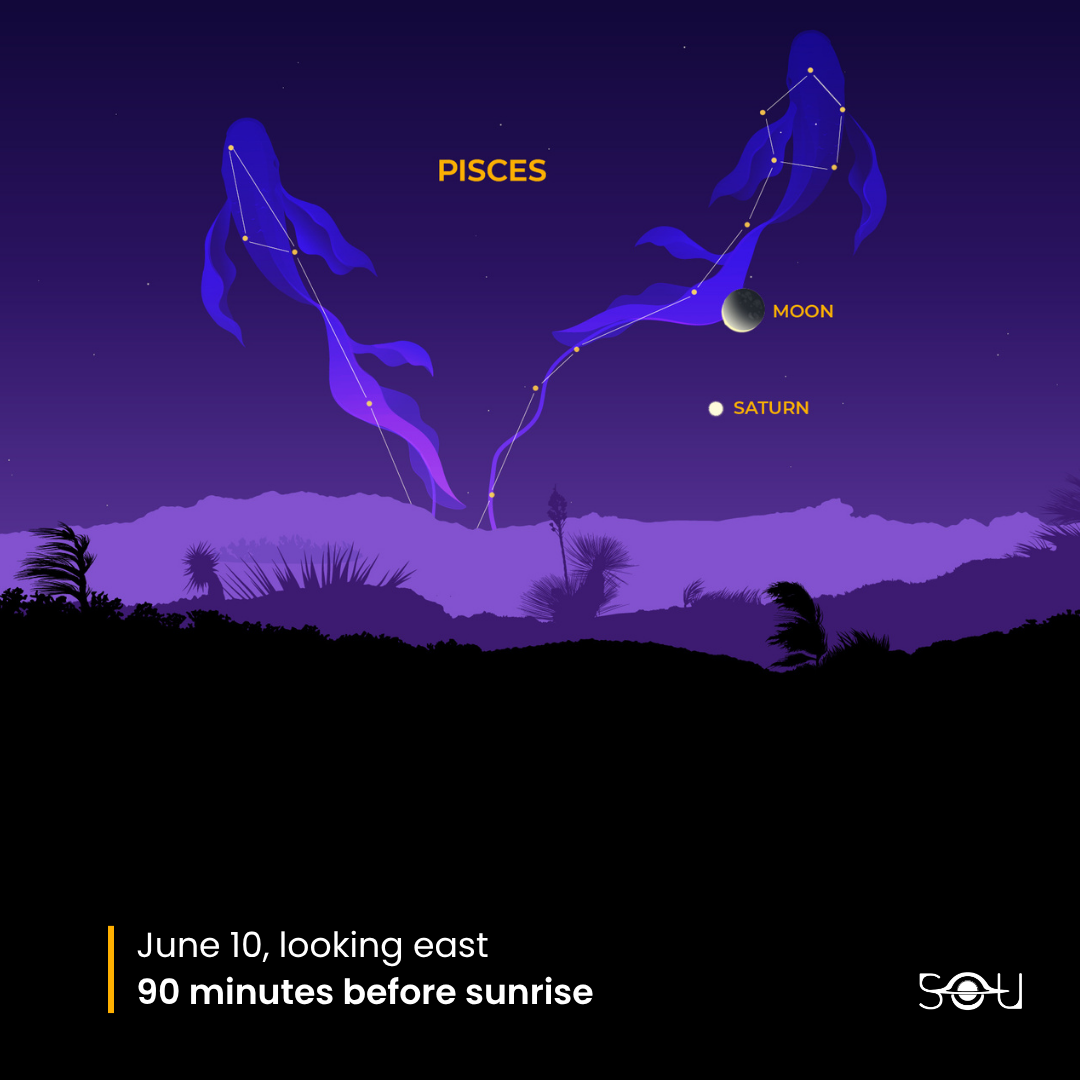
Now the action splits between dusk and dawn. In the evening, Venus has already climbed past Jupiter and sits about 2 degrees above it, the gap widening from here as Mercury hangs lower and starts to fade.
Before sunrise, turn east: the waning crescent Moon, about a third lit, stands roughly 6 degrees from Saturn, riding high in the eastern sky an hour before dawn. Saturn, near magnitude 0.8, is the brightest point in that stretch of Pisces and easy even with the Moon close by.
Far to their lower left, reddish Mars holds near magnitude 1.3, low and best run down with binoculars.
June 12 — A crescent Moon meets Mars
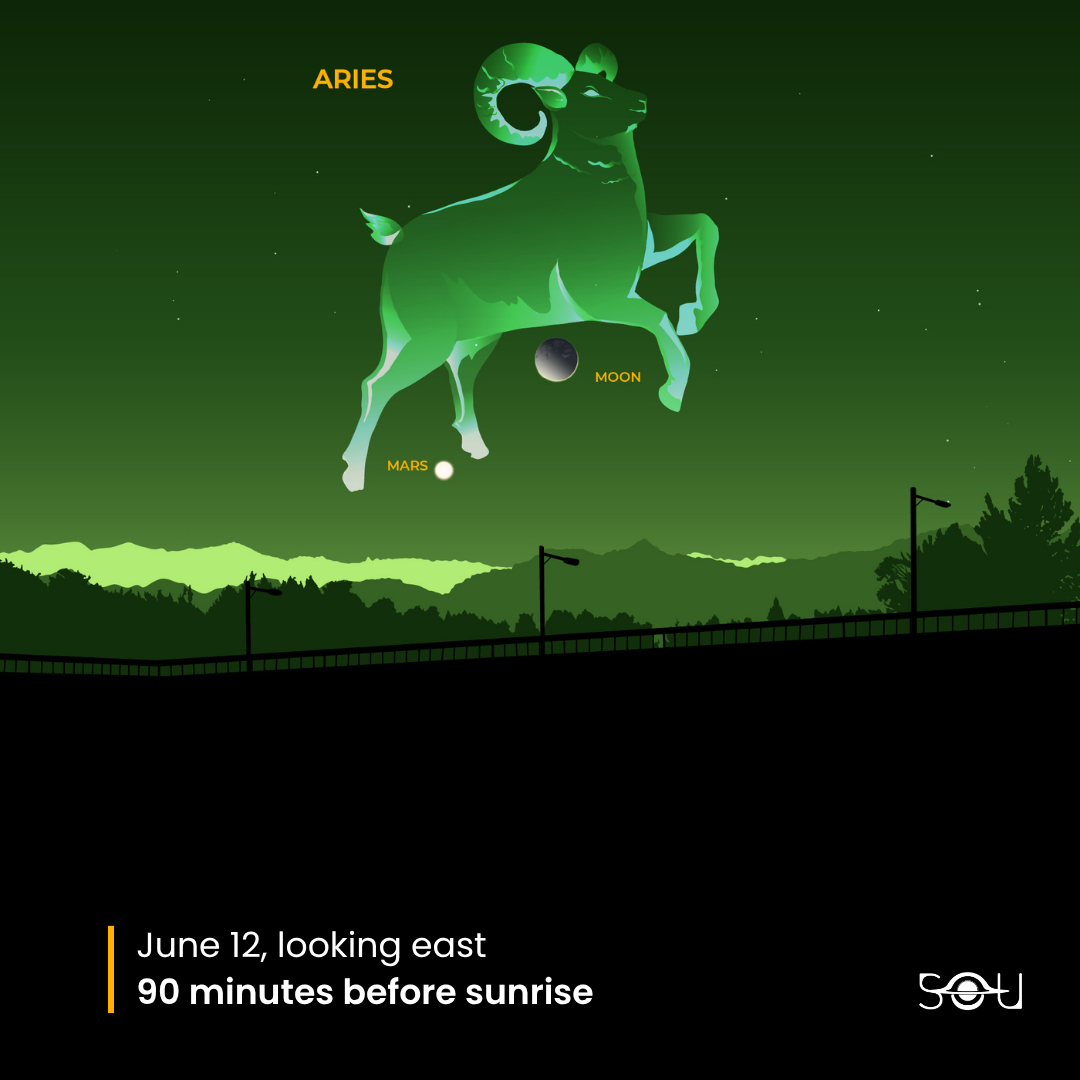
The Moon, down to a thin sliver around 11 percent lit, catches up with Mars this morning.
It rises almost directly above the Red Planet, the two close enough to share a single binocular field. Above them sit Hamal and Sheratan, the lead stars of Aries, and to Mars's lower left you may pick out the Pleiades, the small dipper-shaped cluster in Taurus, climbing out of the twilight.
June 13 — Five planets in one night
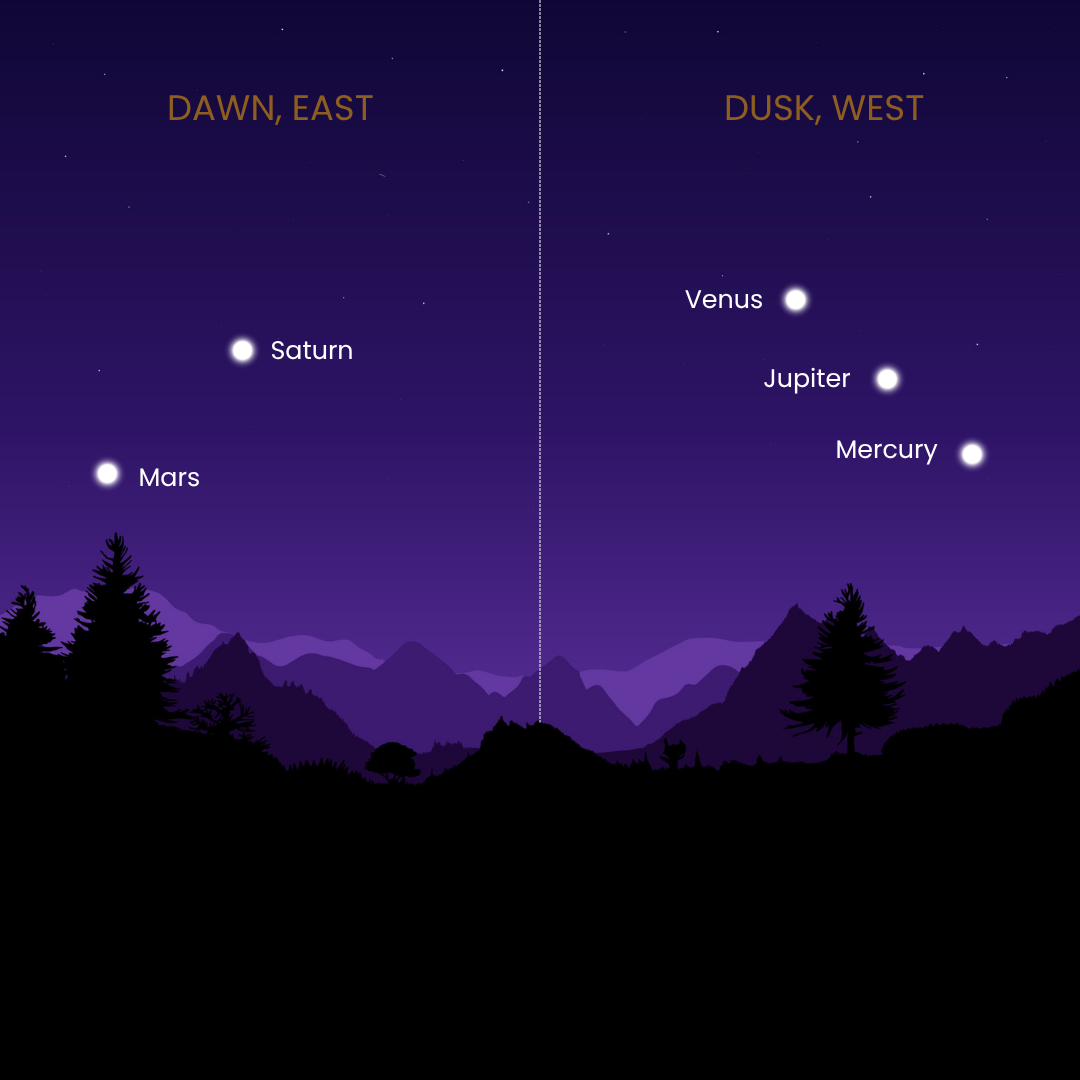
All five naked-eye planets will be visible together on June 13
Today every naked-eye planet is above the horizon at some point during the dark. You cannot frame all five at once, but bookend the night and you will catch them all.
After sunset, Venus, Jupiter, and Mercury line the west-northwest. Before dawn, Saturn and reddish Mars ride the eastern sky, the last thin crescent Moon nearby.
Saturn stands more than 20 degrees up in the east-southeast an hour before sunrise, the easier of the morning two, while Mars sits far to its lower left, faint and low. It is a full circuit of the bright planets in a single turn of the Earth.
June 14 — Mercury at its evening best, and darkening skies
Mercury now sits near its greatest distance from the Sun in the evening sky, its peak showing for the year, low in the west-northwest about 45 minutes after sunset. It is never bright, so a clear, flat horizon and binoculars help.
The Moon has nearly vanished, a hair-thin crescent low in the dawn ahead of tomorrow's New Moon, which hands the next several evenings back to dark skies and the rising summer Milky Way.
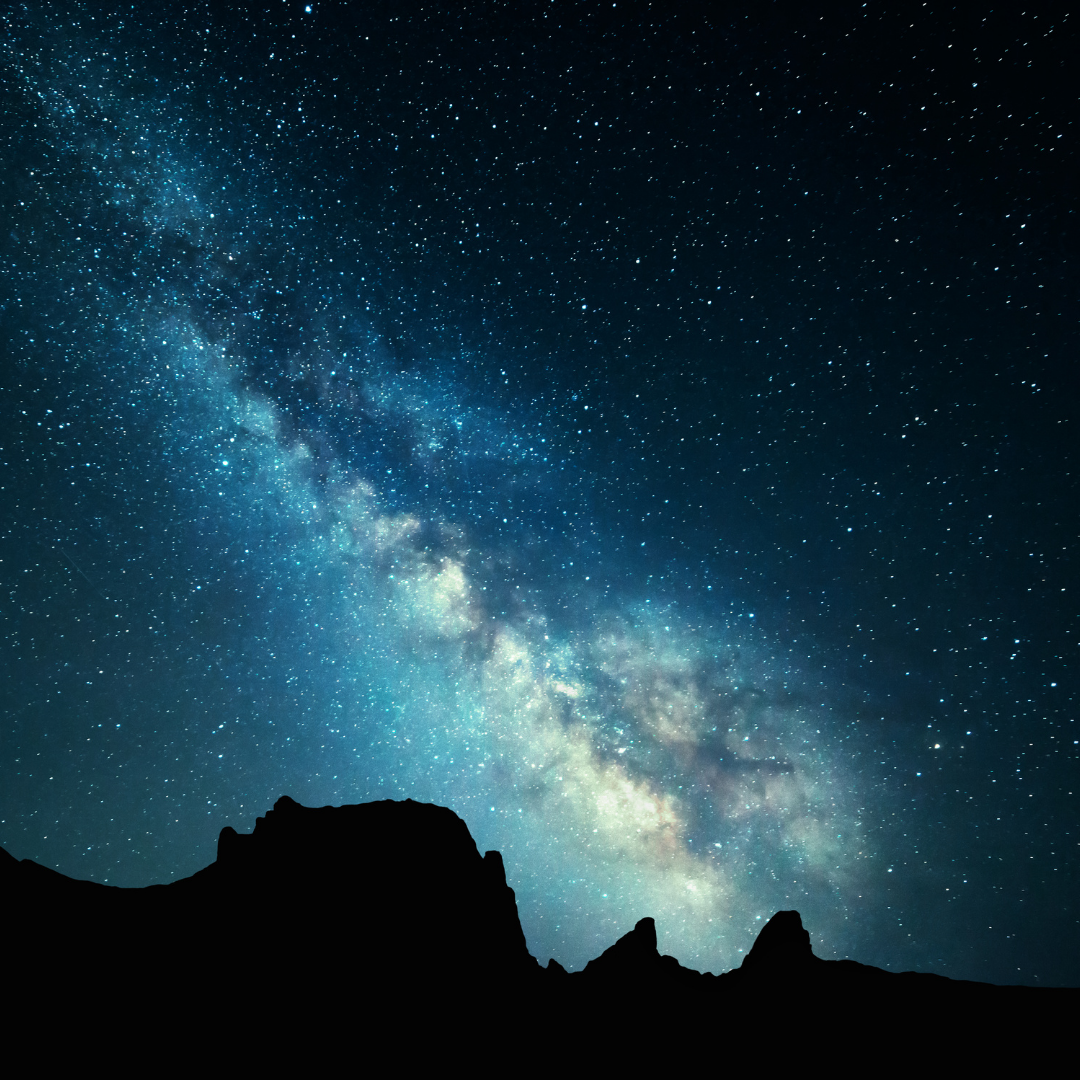
The Milky Way Season Returns
enus and Jupiter, so tightly paired five nights ago, are now plainly separate, one climbing higher each evening, the other sliding toward the Sun. Within weeks Jupiter will be gone from the evening sky entirely, slipping behind the Sun before it returns at dawn in late summer.
Next week, a returning crescent rejoins the evening planets and slips close to Venus on the 17th, an encounter that becomes a true occultation from parts of the Americas, while Mercury holds its best post-sunset stand and the solstice on the 21st brings the longest day of the northern year.
Also Read

Venus meets Jupiter June 8 and 9, Mercury joins the evening planets, five objects line up on June 18, and a Strawberry micromoon ends the month.
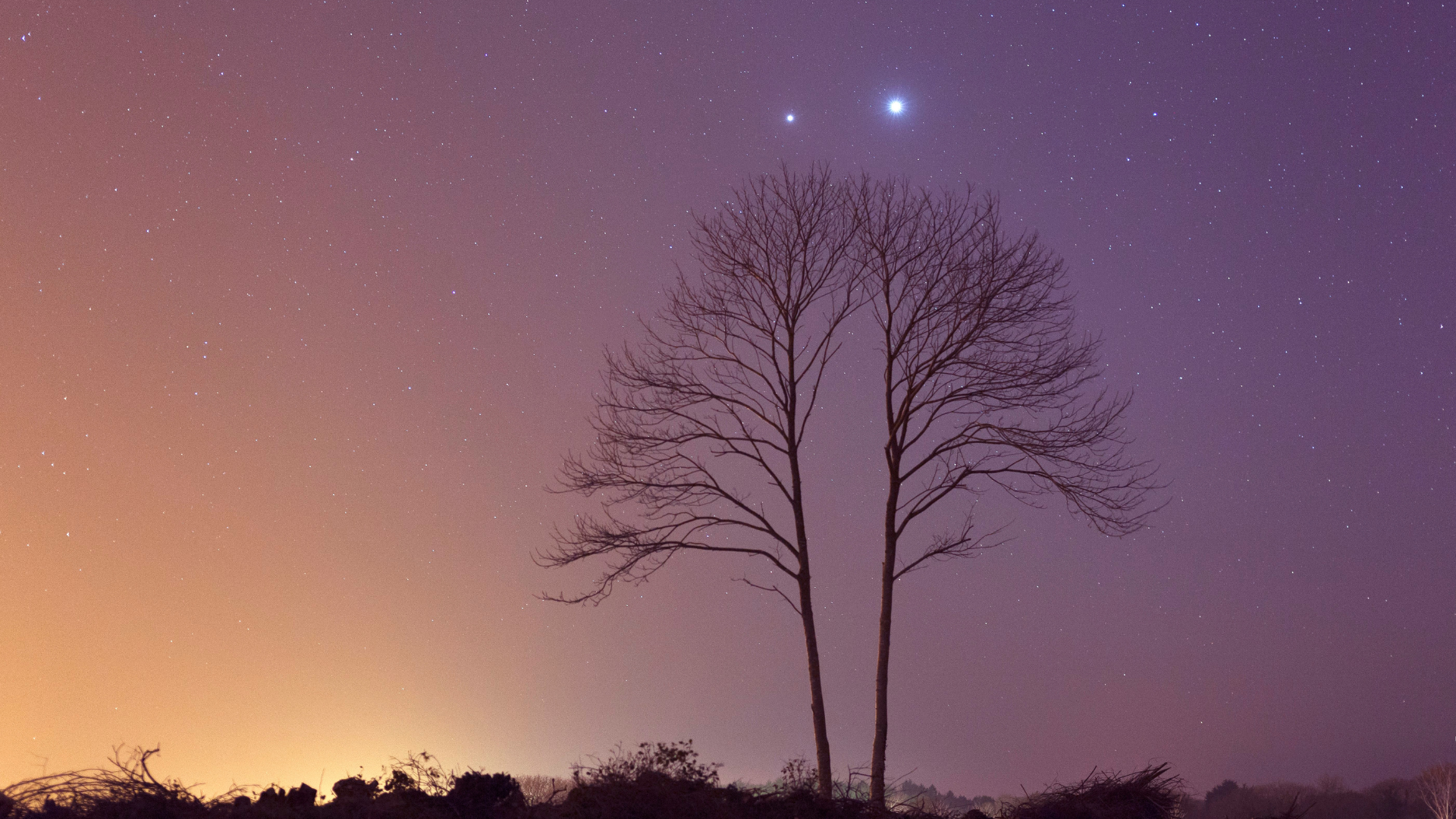
Venus and Jupiter meet just 1.6° apart on June 9, 2026, the brightest planetary conjunction of the year. Here's when, where, and how to see it.
Discover the top 5 astronomy apps that turn your smartphone into a powerful stargazing tool. From real-time sky maps to telescope control...