
The Sky This Week, June 29 - July 5, 2026
Author
Rishabh Nakra
Date Published
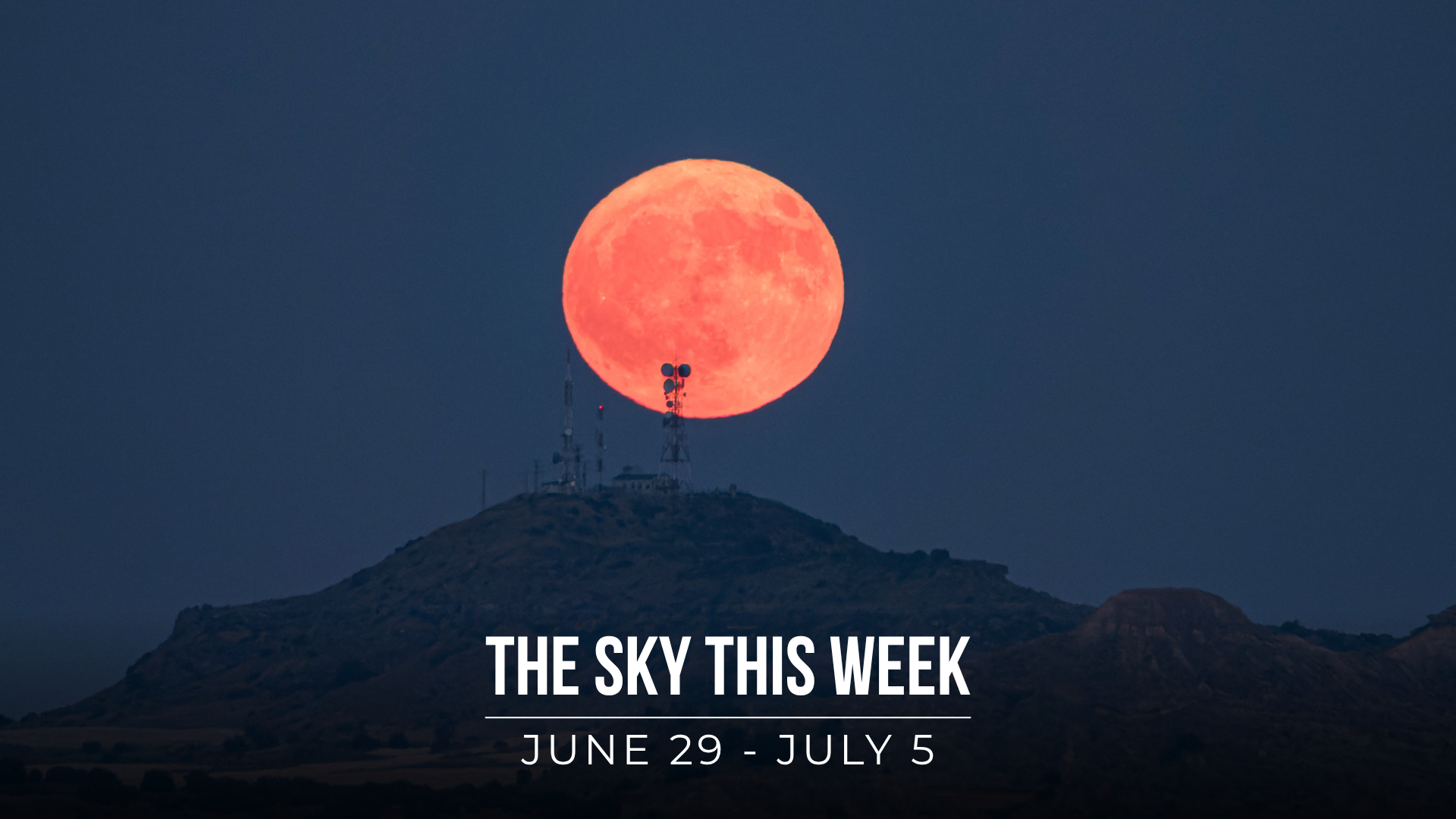
June goes out in style. The Strawberry Moon rises on Monday night looking smaller than any full Moon of 2026, parked improbably inside the Teapot of Sagittarius, while Mars makes its closest pass by the Pleiades in the dawn sky.
By week's end Mars has a second appointment, this one startlingly precise: a near-miss with Uranus tight enough to squeeze both planets into a single telescope view. In between, Venus rules the evening unchallenged, and the brilliant stars of the Summer Triangle take command of the late hours. Here's what to look for, night by night.
Also Read: 9 night sky events to see in July 2026
June 29 — The Strawberry Micromoon Rises in the Teapot
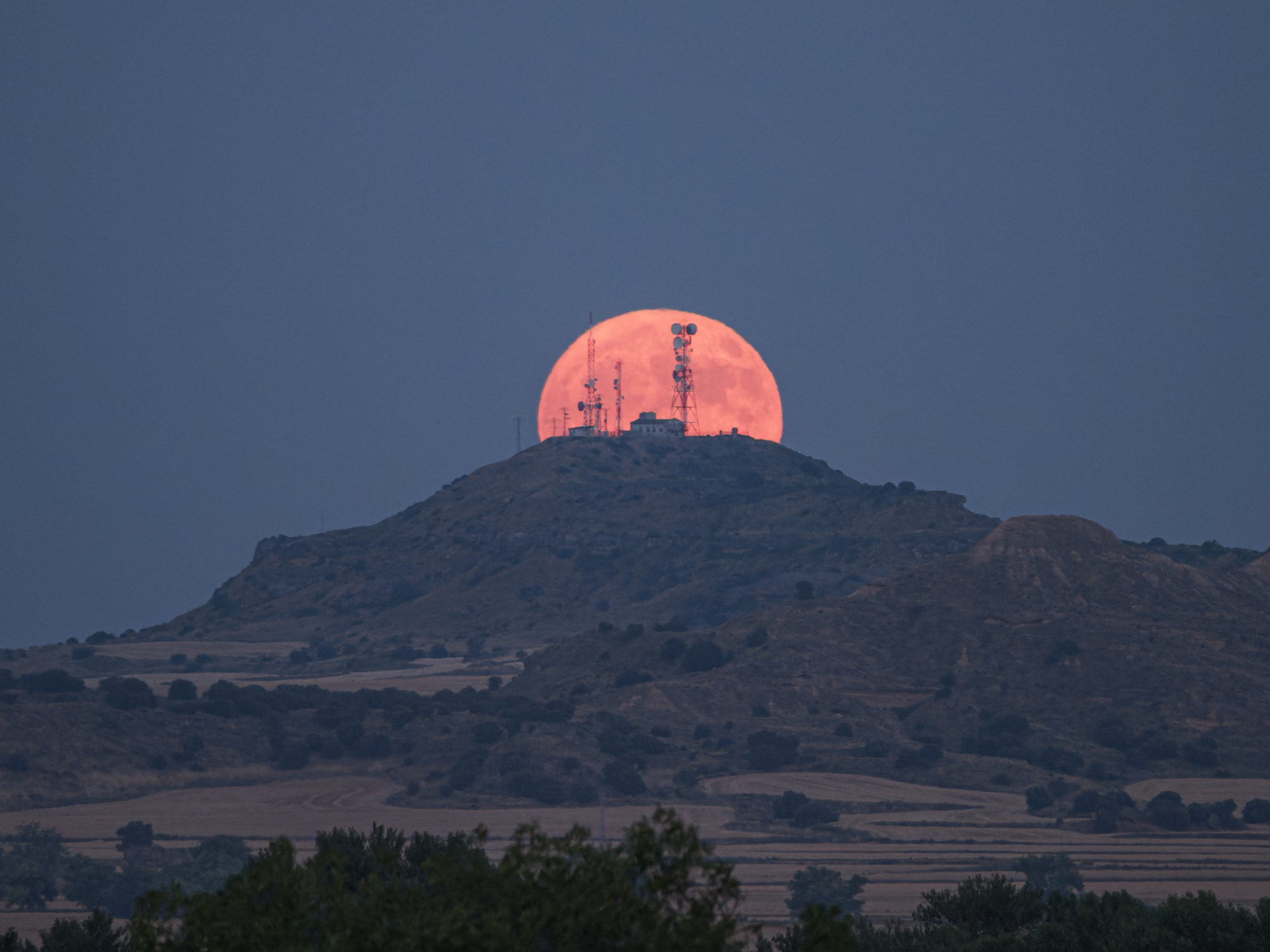
June's full Moon arrives at 23:57 GMT, shining in Sagittarius near the Teapot asterism, and from some regions it will appear right inside the Teapot.
Early Native American tribes knew this full Moon as the Strawberry Moon because it signaled the time of year to gather ripening fruit; it has also been called the Rose Moon and the Honey Moon. This year it carries a third distinction. The full Moon occurs just one day after the Moon reaches apogee at 406,438 kilometers, making it a Micromoon, the smallest-looking full Moon of the year, roughly 14 percent smaller in apparent diameter than a perigee supermoon.
Watch it climb in the southeast after sunset. Riding the low summer ecliptic from northern latitudes, it stays close to the horizon all night, often glowing amber through the thick air, a honey Moon in appearance as well as name.
June 30 — Asteroid Day, and Uranus Creeps Toward Mars
Tonight's date is no accident of the calendar. As the anniversary of the Tunguska Event, Asteroid Day is the United Nations-sanctioned day of public awareness around planetary defense and the risks that asteroids pose to Earth.
On June 30, 1908, something exploded over the Siberian taiga with the force of several hundred Hiroshimas, flattening trees across an area larger than Delhi. No crater was ever found; the object detonated in the air. It remains the largest impact event in recorded history, and the reason astronomers now catalog near-Earth objects with such persistence.
In the predawn sky, a quieter drama develops. Uranus, a dim magnitude 5.8 and challenging to spot, stands more than 10 degrees high in the east an hour before sunrise, just 2.5 degrees east of Mars in Taurus. Note the gap through binoculars. It shrinks dramatically by Saturday.
July 1 — Venus, Alone at the Top
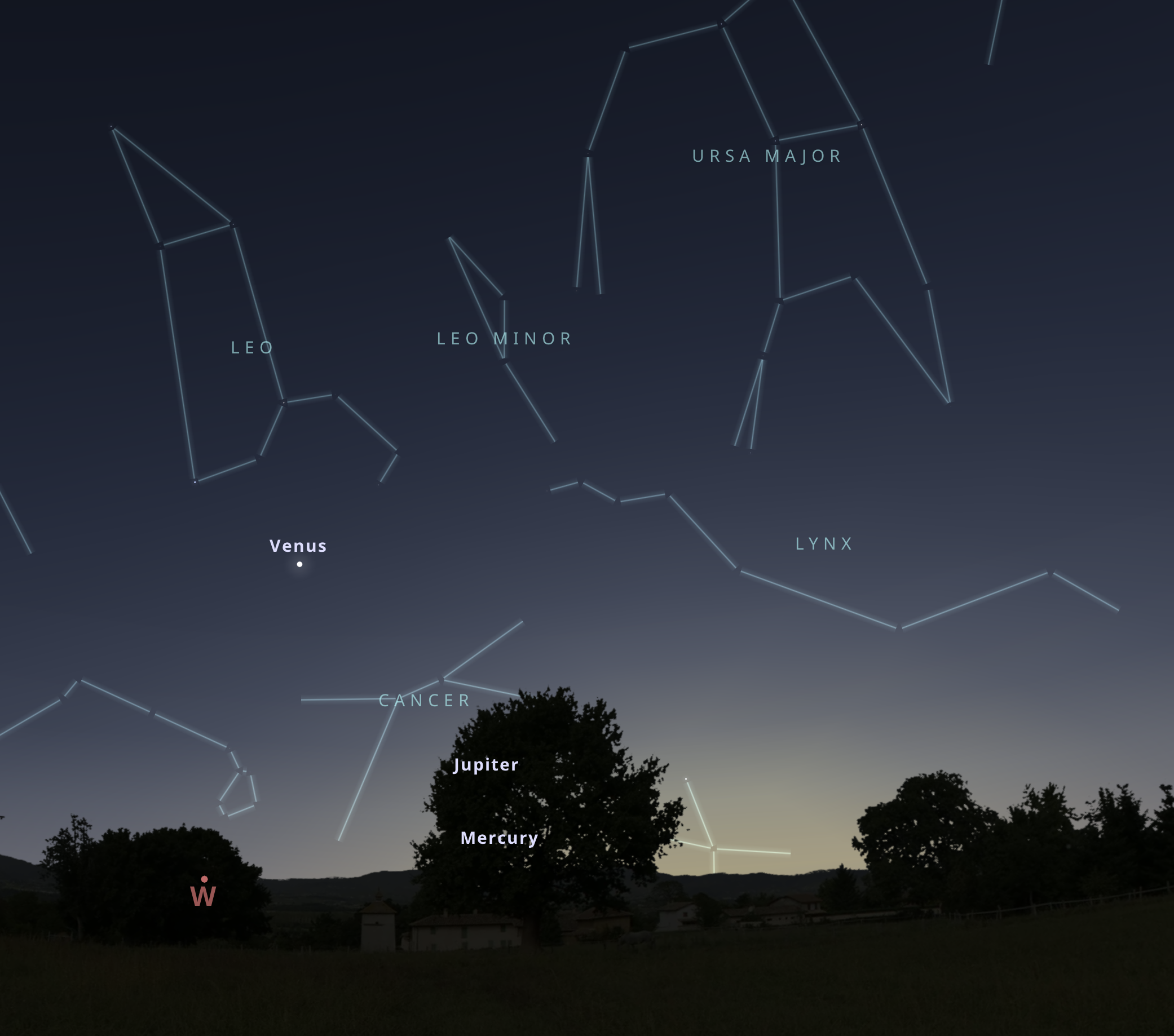
With Jupiter and Mercury swallowed by the twilight, Venus inherits the evening sky outright, and it is in fine form. The planet sets 2 hours after sunset on July 1, blazing at around magnitude minus 4 in the west, bright enough to spot before the sky fully darkens and bright enough to be mistaken for an aircraft after it does.
Through a telescope Venus shows a shrinking gibbous disk as it swings around its orbit toward us. The planet is now stepping eastward out of Cancer toward Leo, closing in night by night on the star Regulus; their meeting comes next week, on July 9.
Track Venus against the background stars over the next several evenings and you can watch planetary motion happen in something close to real time.
July 2 — The Summer Triangle Takes the Sky
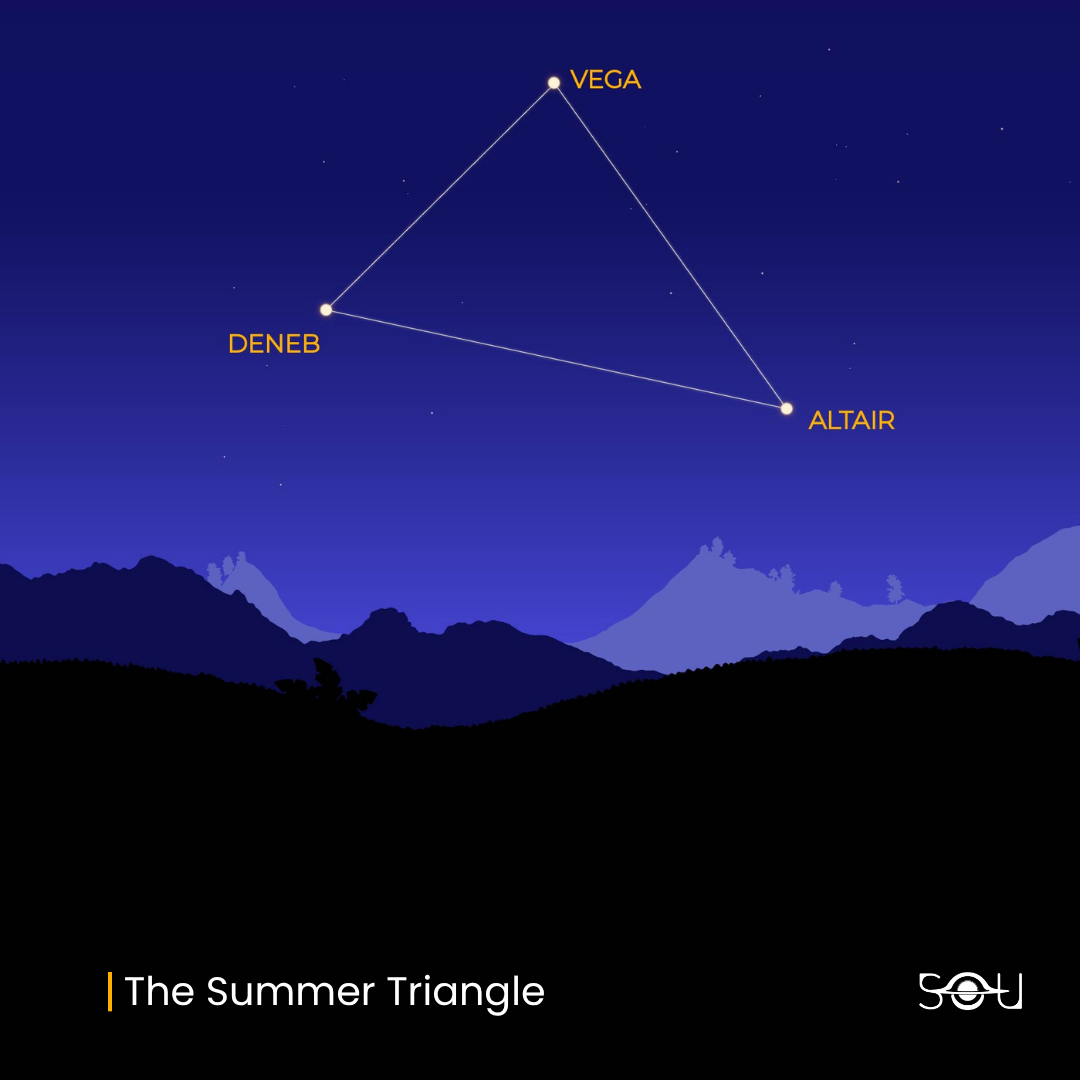
Summer Triangle, a prominent asterism of three stars — Deneb, Vega, and Altair
No headline event tonight, but step outside around midnight and look straight up if you're at northern mid-latitudes. Three brilliant stars dominate: Vega in Lyra, the fifth-brightest star in the night sky, 25 light-years away; Deneb in Cygnus, a distant supergiant whose true luminosity dwarfs nearly everything visible to the naked eye; and Altair in Aquila, a fast-spinning star just 17 light-years out. Together they form the Summer Triangle, the signpost asterism of the season.
The Milky Way runs straight through it, from Cygnus down toward Sagittarius, though the waning gibbous Moon rising in the late evening will mute the fainter star clouds this week. Southern Hemisphere observers find the Triangle lower in the north, an upside-down marker of their winter sky.
July 3 — Saturn Climbs Toward Prime Time
The morning sky keeps improving for the ringed planet. Saturn, drifting through Pisces, now rises well before the waning Moon becomes a nuisance and stands high enough in the east before dawn for steady telescope views.
The rings, which closed to a vanishing edge-on line in 2025, continue to open wider, restoring the planet to its full theatrical self ahead of its opposition on October 4, when the rings make their return.
Even a small telescope at 50x shows the ring system; larger apertures begin to pull out the Cassini Division and the moon Titan, which shines at eighth magnitude. If you observe in the hour before first light, the steadying predawn air often delivers the sharpest views of the night.
July 4 — Mars and Uranus, Nine Arcminutes Apart
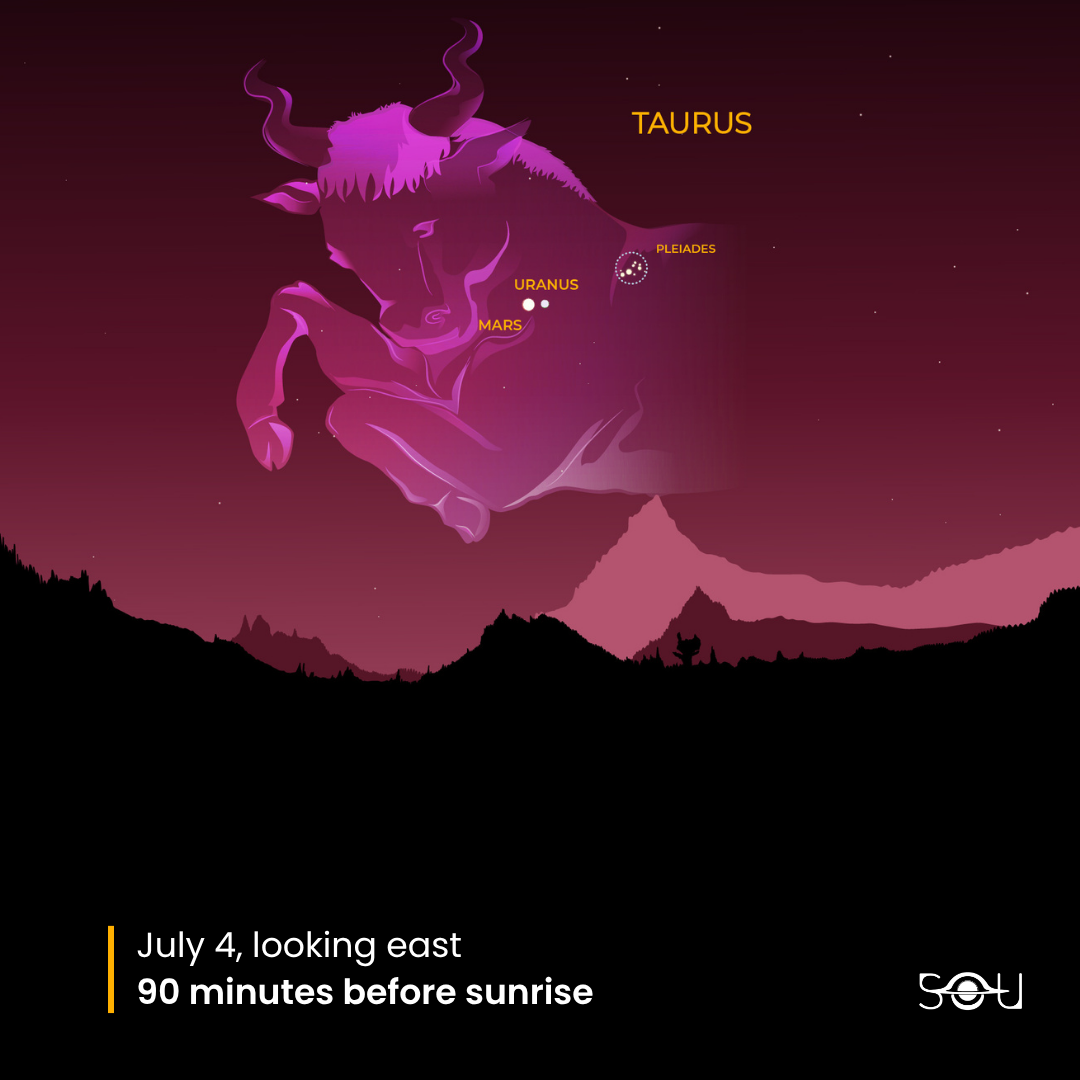
The week's most precise event belongs to the dawn. Mars passes just 9.6 arcminutes from Uranus on July 4, a separation of about one-third the apparent width of the full Moon. Conjunctions this tight between two planets are uncommon; most pass with a degree or more to spare.
Find Mars first, a magnitude 1.3 ember low in the east-northeast about 90 minutes before sunrise, below the Pleiades in Taurus. Then look through binoculars or, better, a low-power telescope eyepiece: Uranus is the faint, slightly greenish point of magnitude 5.8 sitting almost on top of it. The pairing is a cheat code for finding the seventh planet, which normally requires star-hopping and patience.
The two worlds are nothing alike up close, a frozen ice giant four times Earth's width and a rusted desert half of it, here stacked by perspective alone.
July 5 — The Milky Way's Quiet Return
The Moon, now well past full, doesn't rise until close to midnight, and each night this week it rises later. That hands the early evening back to deep-sky observers.
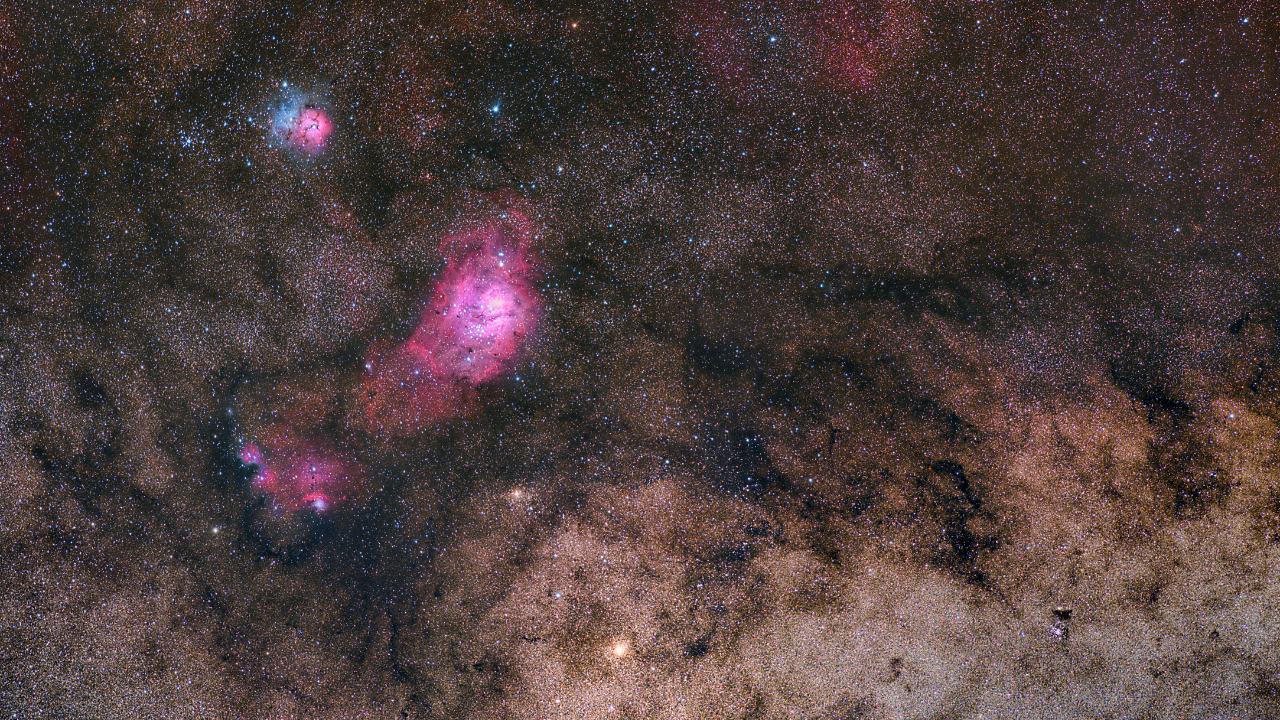
Starfield around the Sagittarius constellation showing three bright nebula: Lagoon Nebula (M8), Trifid Nebula (M20) and NGC 6559. The Lagoon nebula is at centre, the Trifid nebula at upper left, and NGC 6559 at centre left. The red regions are emission nebulae, or clouds of gas ionised by the radiation from hot young stars within them, causing them to glow.
As twilight ends, the Teapot of Sagittarius stands in the southeast with the galactic center steaming from its spout, flanked by the richest hunting grounds of the year: the Lagoon Nebula (M8), visible to the naked eye from dark sites as a soft glow, the Trifid Nebula just above it, and the great star clouds of Scutum and Sagittarius arcing overhead through the Summer Triangle. Binoculars alone reveal dozens of clusters along this stretch.
The dark window widens every night from here toward the July 14 new Moon. Plan accordingly.
Next week, Earth reaches aphelion, its farthest point from the Sun all year, on July 6, the waning Moon visits Saturn in the predawn sky, and Venus closes its pursuit of Regulus with a brilliant twilight meeting on July 9.
Read our full report of night sky events in July 2026 here
July 2026 sky guide: Earth at aphelion, a super new moon, Venus by Regulus, Pluto at opposition, and a moon-washed Delta Aquariid meteor shower.

Discover the top 5 astronomy apps that turn your smartphone into a powerful stargazing tool. From real-time sky maps to telescope control...