
The Sky This Week, July 13 - July 19, 2026
Author
Rishabh Nakra
Date Published
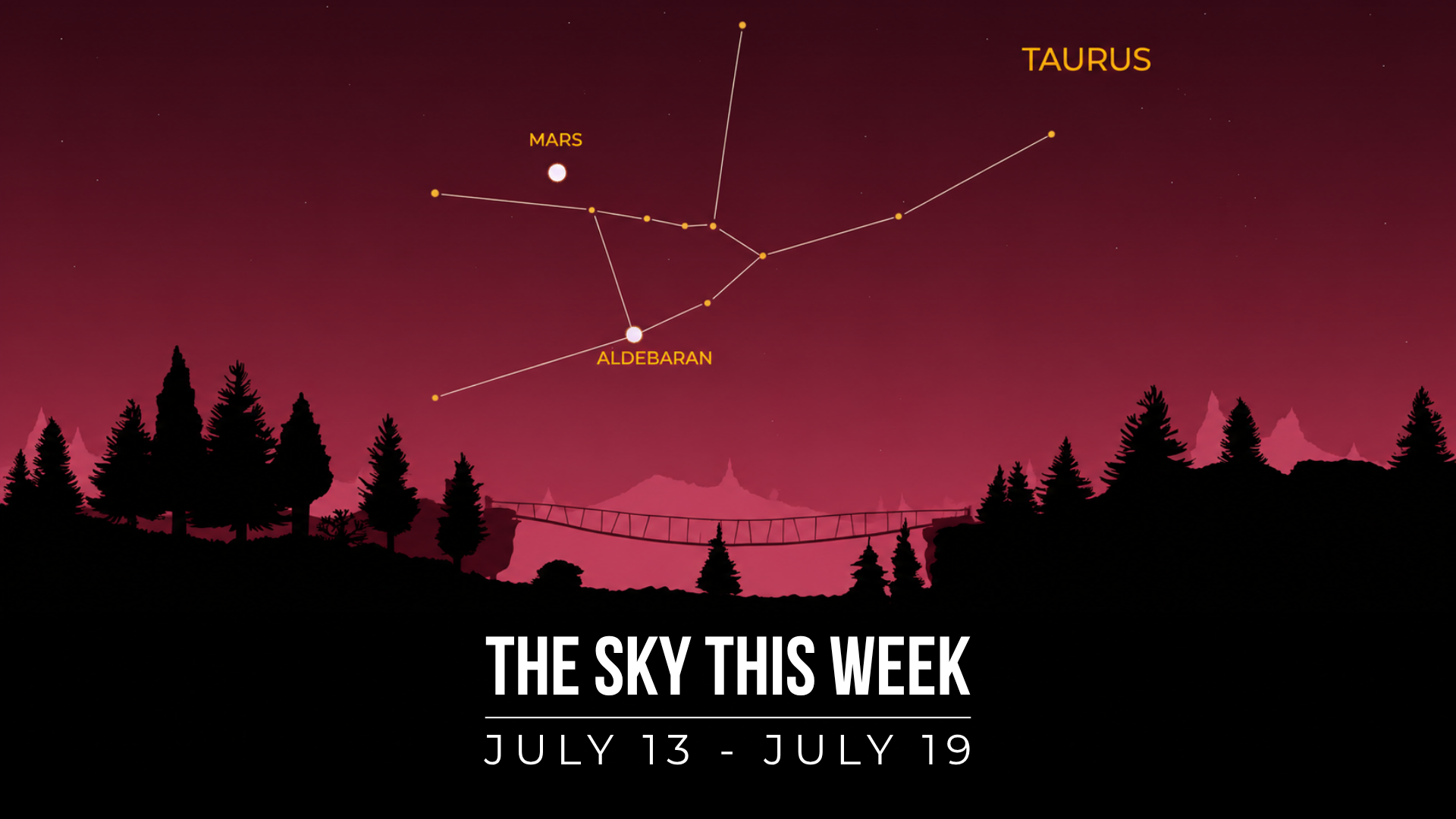
This week belongs to the dark.
The new Moon on Tuesday delivers the deepest skies of July, perfect timing for the Milky Way's annual peak, and the Perseid meteor shower quietly switches on ahead of its moonless August spectacle.
The Moon then returns as a slender evening crescent and wastes no time, threading past the Beehive Cluster before joining Venus and Regulus in a tight Friday twilight gathering. And at dawn, Mars stands beside the star it was named to rival.
Here's what to look for, night by night.
Also Read: 9 night sky events to see in July 2026
July 13 — Mercury Passes Between Earth and Sun, While Mars Meets Its Rival
Two planets bookend the day. Mercury reaches inferior conjunction on July 13, sliding through the gap between Earth and the Sun, invisible in the glare.
It's a reminder of how fast the innermost planet lives: just four weeks ago it stood at its evening best, and by early August it returns at dawn, with greatest western elongation coming on August 2, when it stands 19.5 degrees from the Sun, low in the eastern sky just before sunrise.
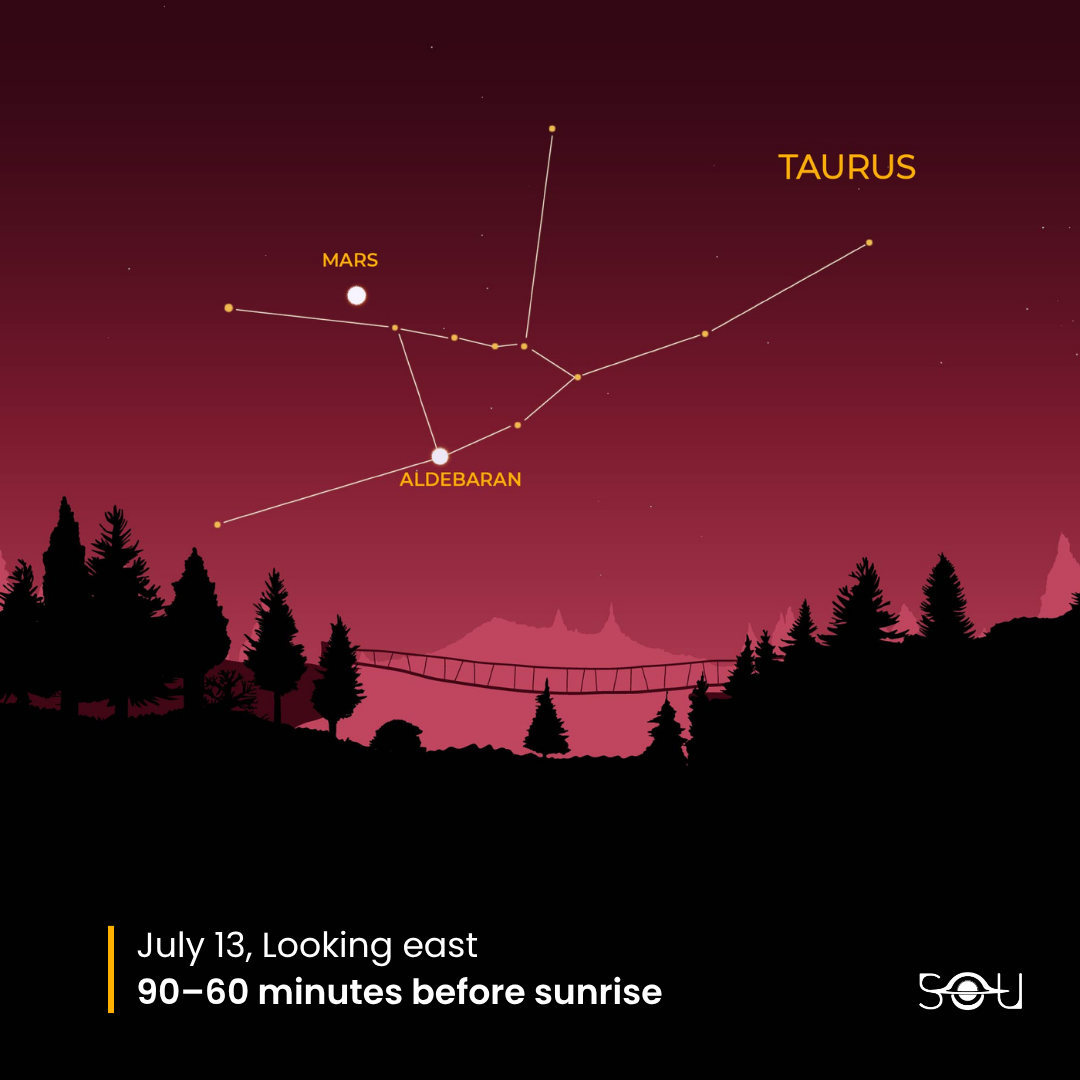
Mars meets Aldebaran in the predawn sky on July 13, 2026
The observable event happens in the morning. Mars passes 5.3 degrees north of Aldebaran on July 13, low in the east before dawn. This is a pairing with history built into its name: Antares, which Mars visits in other years, means "rival of Ares," but Aldebaran is the original impostor, an orange giant so Mars-like in color that ancient observers confused the two.
Compare them tonight. At magnitude 0.9, the star currently outshines the distant, magnitude 1.4 planet, the Bull's eye beating the god of war.
July 14 — New Moon, and the Best Night of the Month
The Moon reaches its new phase at 09:45 UTC, positioned on the same side of Earth as the Sun and invisible in the night sky; this is the best time of the month to observe faint objects such as galaxies and star clusters because there is no moonlight to interfere. And mid-July is when that darkness pays its highest dividend.
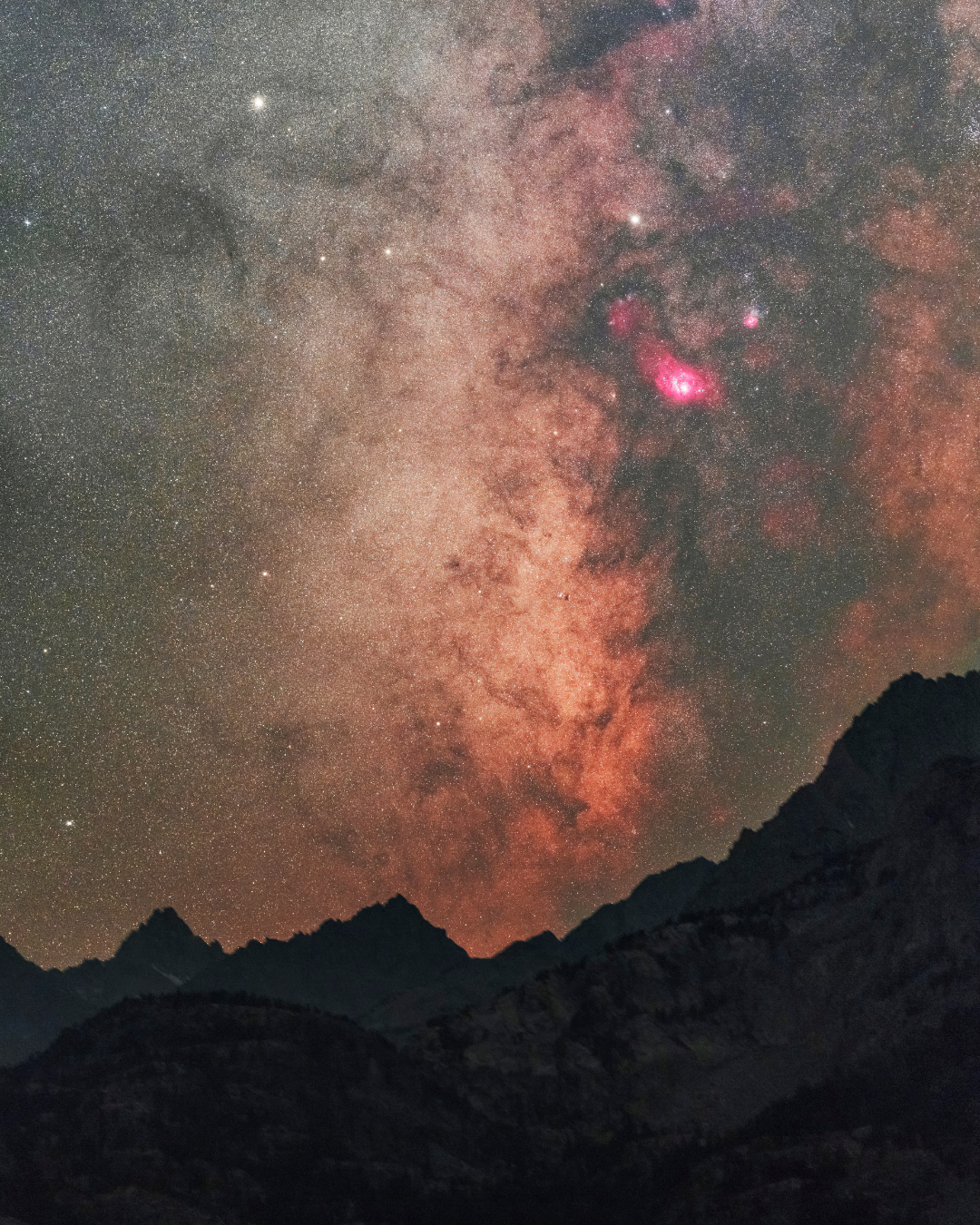
Central core of the Milky Way. The Lagoon nebula (red) is at right. The Milky Way is our galaxy seen from the inside.
The galactic core in Sagittarius reaches its best evening altitude of the year, and from a genuinely dark site the Milky Way arches from the southern horizon up through the Summer Triangle, textured with star clouds and the dark dust lanes of the Great Rift.
Binoculars sweep up the Lagoon Nebula, the Sagittarius star cloud, and the Scutum star cloud with its jewel, the Wild Duck Cluster M11. If you make one dark-sky trip in July, make it tonight or tomorrow.
Also Read: How to See the Milky Way's Core, From Anywhere on Earth
July 15 — A Razor-Thin Moon Brushes the Beehive
The Moon returns to the evening sky barely a day old and immediately picks up where it left off in June. Tonight it stands near the Beehive Cluster, M44, very low in the west-northwest in deep twilight.
This is a challenge observation, the kind that separates the committed from the casual: a hairline crescent, perhaps 2 percent lit, hanging in bright dusk with a faint star cluster beside it. Binoculars are essential, a flat western horizon nearly so, and the window lasts maybe 30 minutes before both set.
The reward is one of the most delicate sights the sky offers. Miss it and the Moon will be back at the Beehive next month; catch it and you've seen something most skywatchers never bother attempting.
July 16 — Earthshine on a Growing Crescent
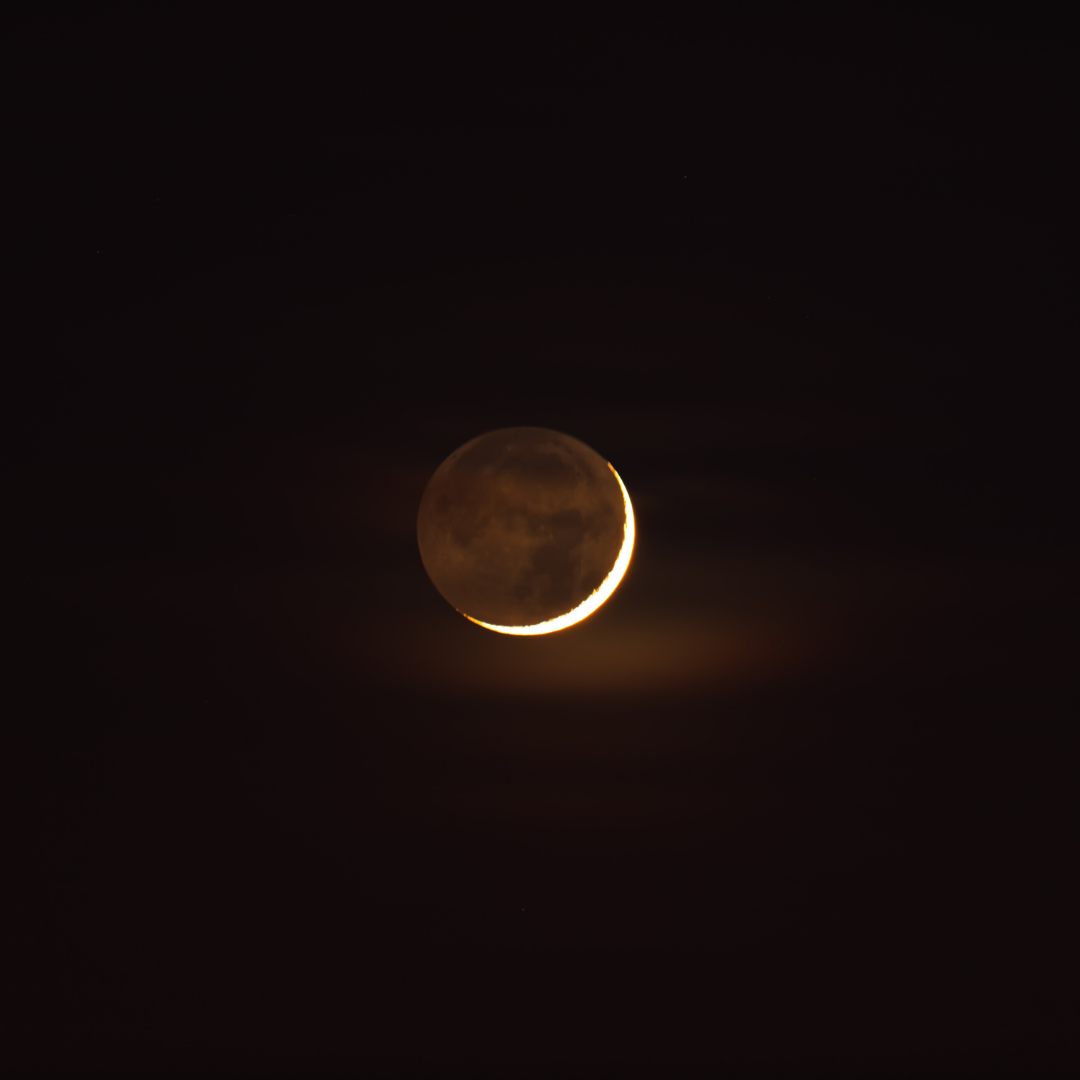
The Moon, now noticeably thicker and higher, climbs through Leo toward tomorrow's main event, and tonight is the week's best evening for earthshine. That ashen glow filling the crescent's dark side is sunlight that has bounced off Earth, crossed to the Moon, and reflected back to your eye, a journey of nearly 800,000 kilometers.
Leonardo da Vinci was the first to explain it correctly, five centuries ago, though he wrongly credited Earth's oceans rather than its clouds as the main mirror. Astronomers still measure earthshine seriously: its brightness tracks Earth's reflectivity, a number that matters for climate science.
Through binoculars, the night side shows its dark maria faintly, a ghost map of the full Moon to come.
July 17 — The Crescent Moon Joins Venus and Regulus, and Perseid Season Opens
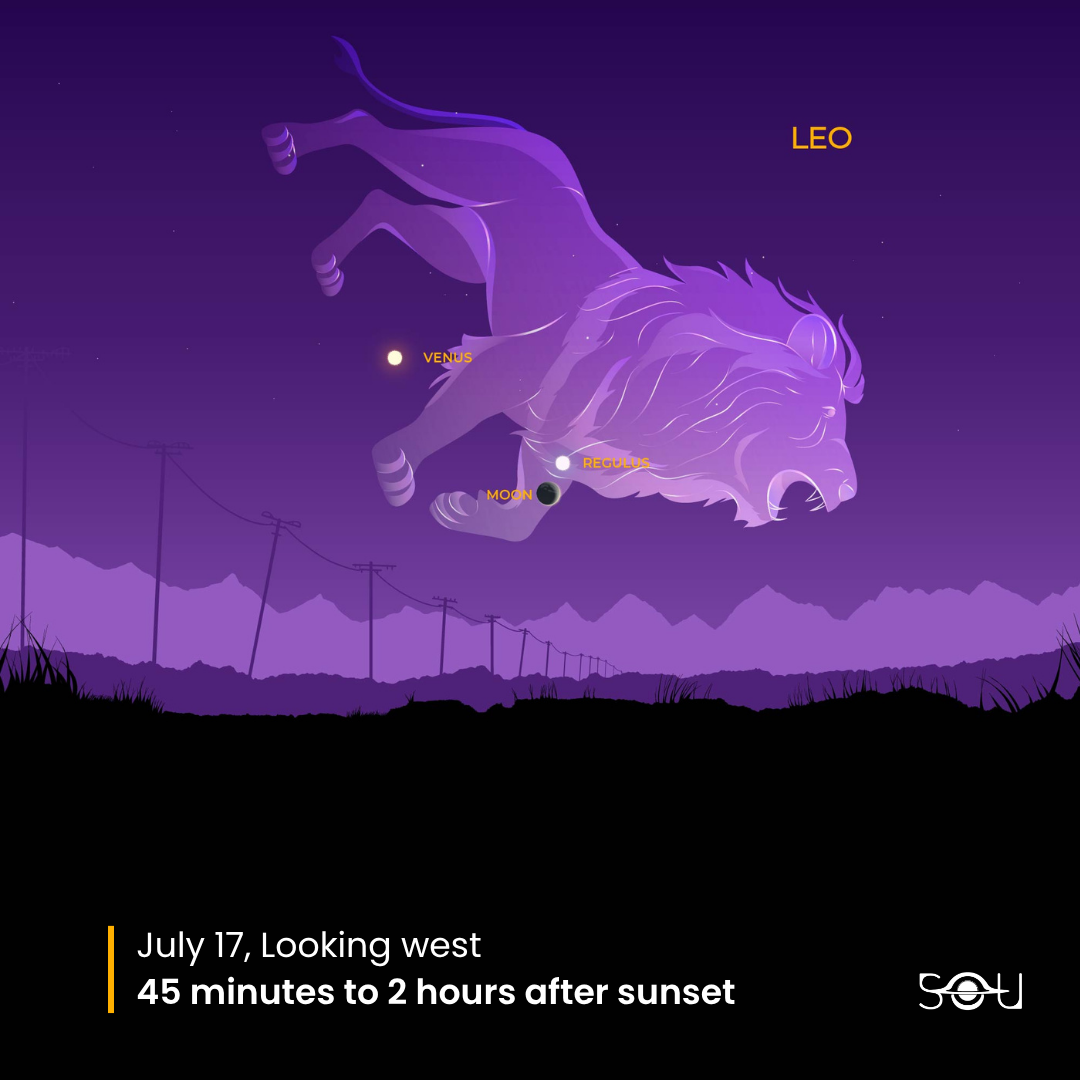
Friday evening assembles the week's showpiece. The Star Walk calendar lists the Moon near both Regulus and Venus on July 17, which translates to a compact twilight tableau in the west: the crescent Moon, brilliant Venus at magnitude minus 4.1, and the blue-white star Regulus gathered in Leo, the planet and star still close from their July 9 near-miss.
The grouping fits comfortably in a binocular field at its tightest and makes an easy naked-eye sight regardless, the three brightest things in the western sky stacked in one corner of the Lion. Look from 45 minutes after sunset until the scene sets two hours later.
The same date carries a promissory note: the Perseid meteor shower runs annually from July 17 to August 24, peaking this year on the night of August 12 and morning of August 13, and this is an excellent year for the Perseids, with no moonlight to interfere.
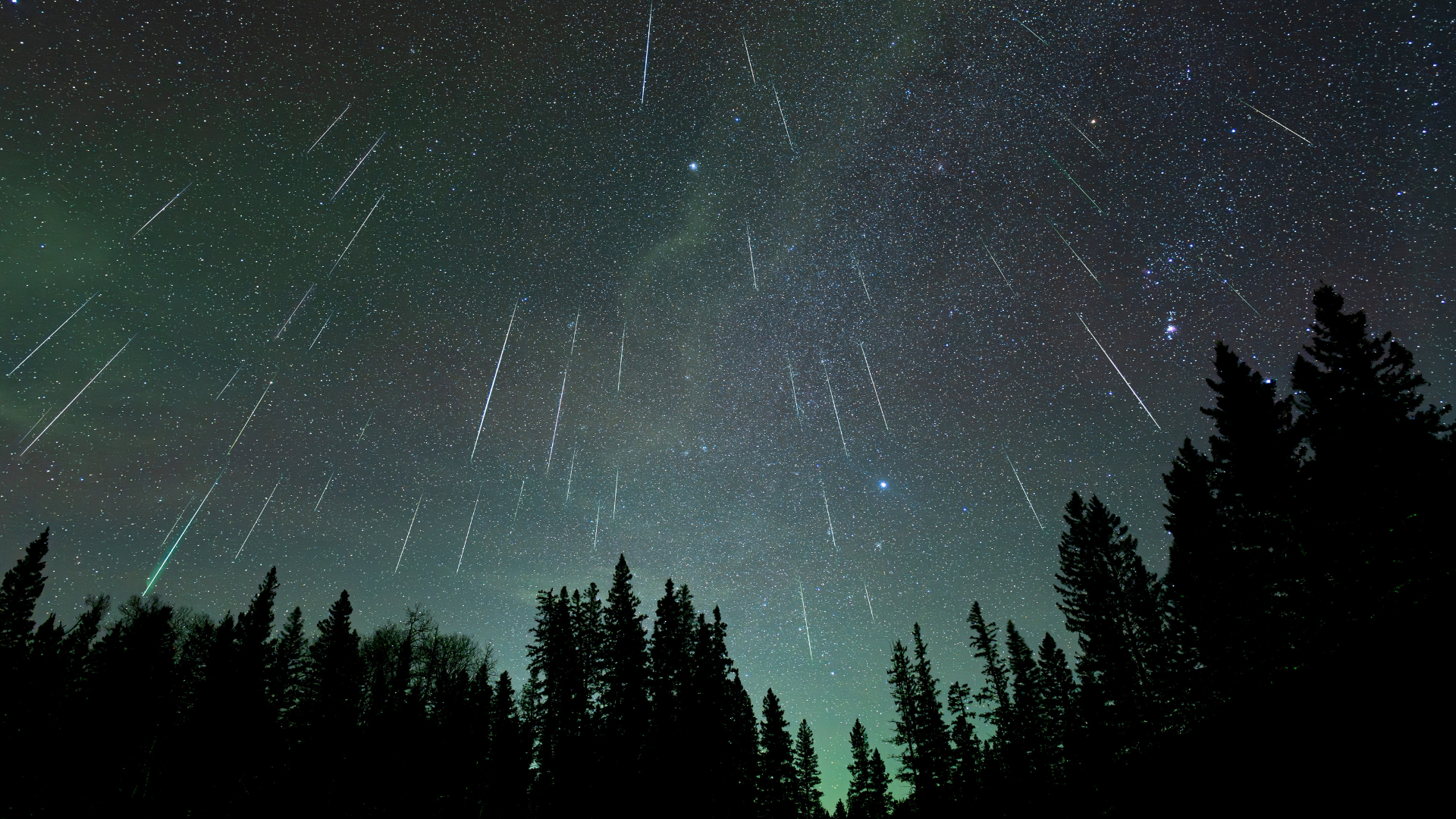
Activity starts as a trickle, a few meteors per night, but from tonight every late-night observing session carries a chance of an early Perseid streaking from the northeast.
July 18 — Noctilucent Clouds, the Atmosphere's Highest Show
A placeholder night for planets, which makes it the right night for an atmospheric phenomenon at its seasonal peak.
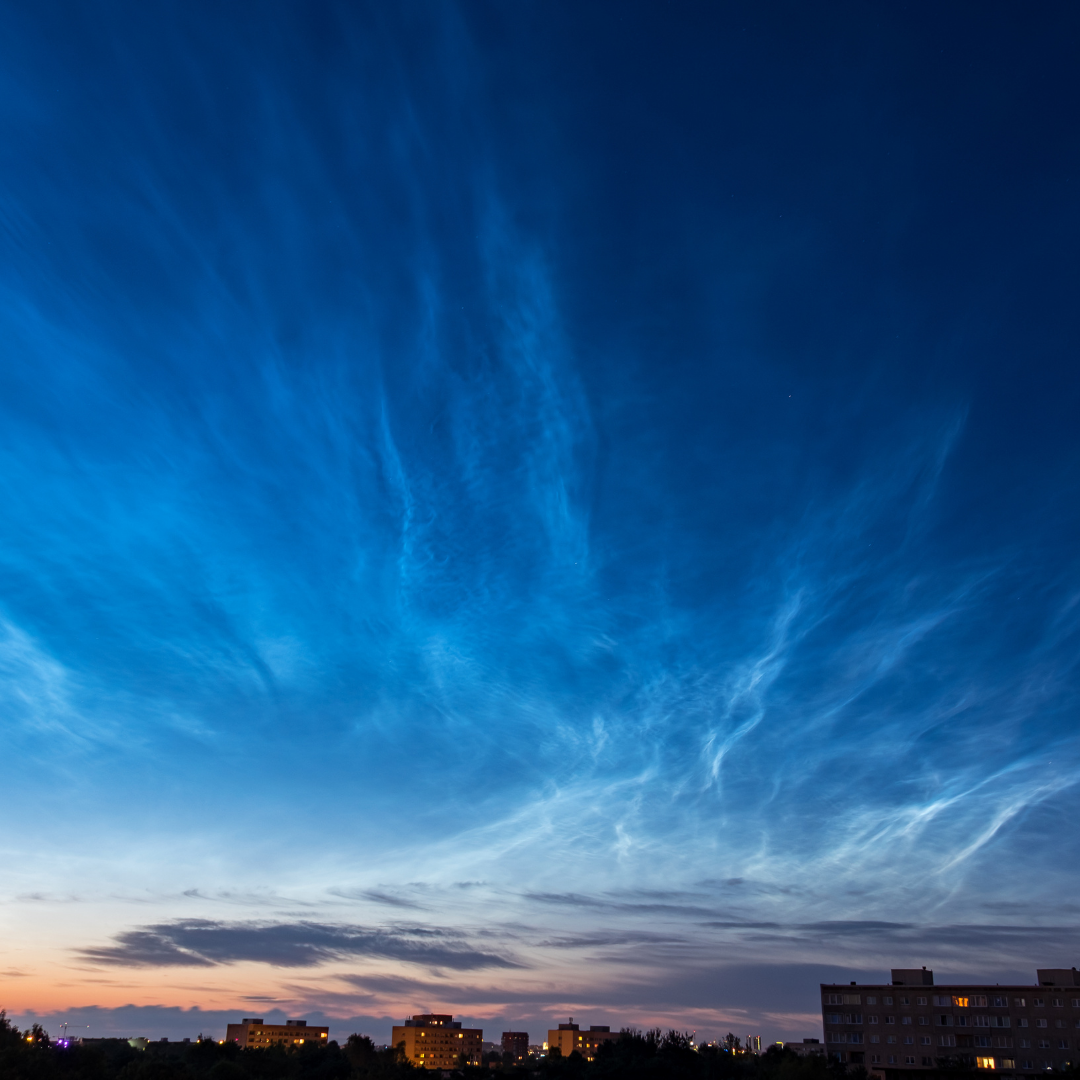
Noctilucent Clouds
For observers above roughly 45 degrees north, mid-July is prime time for noctilucent clouds: electric-blue, rippled wisps that appear low in the north an hour or two after sunset, long after ordinary clouds have gone dark.
They form at about 80 kilometers altitude, at the edge of space, where summer paradoxically chills the upper mesosphere enough for ice to crystallize around meteor dust. Sunlight still reaches that height after ground-level darkness falls, which is why they glow.
They were first recorded in 1885, possibly seeded by the Krakatoa eruption, and they have been spreading to lower latitudes in recent decades, a change some researchers link to rising methane. Watch the north-northwest horizon from late twilight onward.
July 19 — Scorpius at Its Best Before the Moonlight Returns
The crescent Moon sets in mid-evening, leaving the late hours dark, and the southern sky is at its richest.
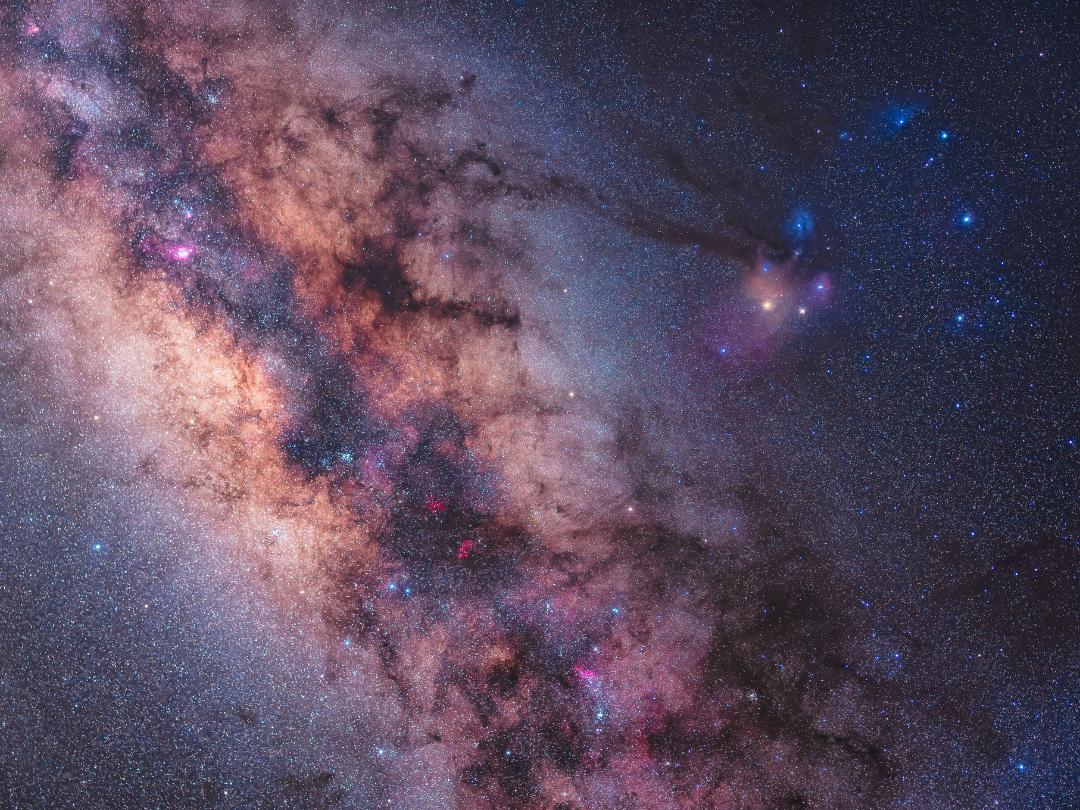
The Galactic Center in Sagittarius at left and the constellation of Scorpius seen in full here at centre and at right. The Dark Horse prances at top with dark tendrils of dust reaching down to yellow Antares and the colourful emission and reflection nebulas of the Rho Ophiuchi area.
Scorpius stands fully upright in the south for northern observers, overhead for southern ones, and it is the rare constellation that actually looks like its name, a long hook of bright stars ending in the stinger pair Shaula and Lesath. Red Antares marks the heart, and binoculars just beside it reveal the globular cluster M4, one of the nearest globulars at about 7,000 light-years.
Near the stinger, the open clusters M6 and M7 are naked-eye smudges from dark sites and binocular showpieces from anywhere, M7 so prominent that Ptolemy cataloged it in the year 130.
The Moon thickens nightly from here, so this weekend closes July's dark window. Spend it looking south.
Next week, the first quarter Moon glides past Spica and on toward a close encounter with Antares, the Perseids continue their slow build, and July closes in on its full Buck Moon and the peak of the Southern Delta Aquariids.
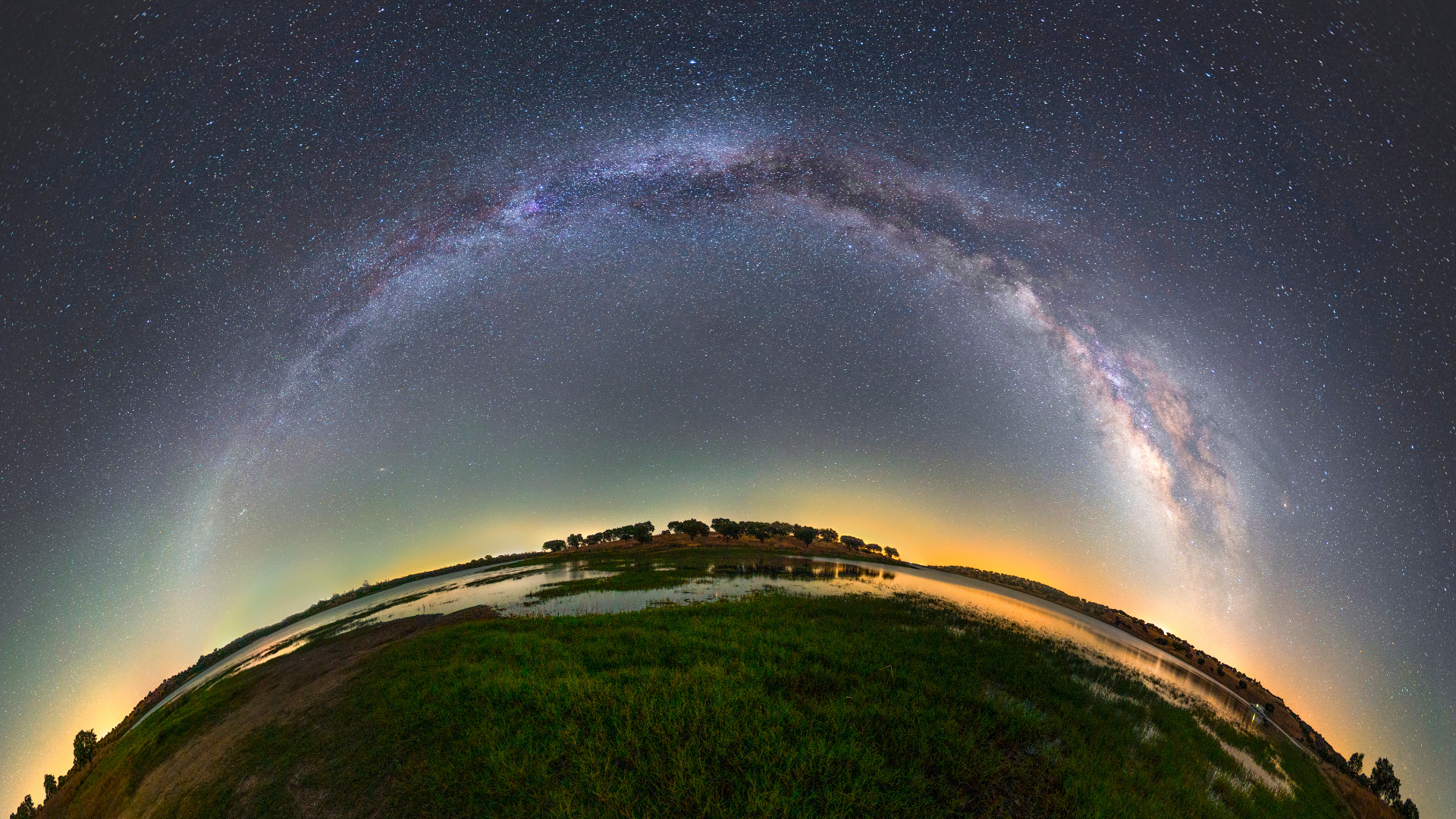
The bright core of the Milky Way is only in season for a few months. Here is when to see it, and why June to August belong to the whole planet.
Discover the top 5 astronomy apps that turn your smartphone into a powerful stargazing tool. From real-time sky maps to telescope control...
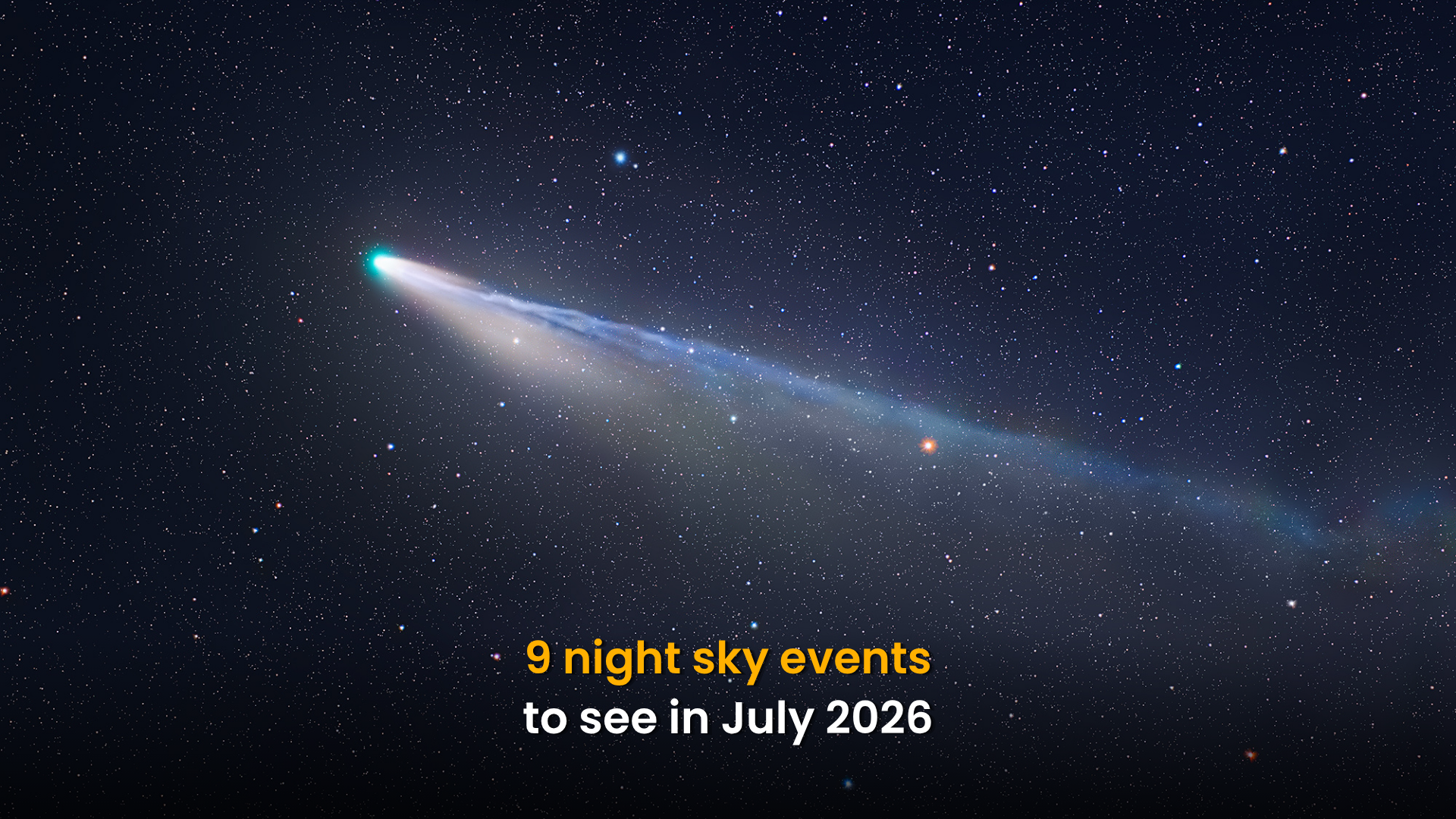
July 2026 sky guide: Earth at aphelion, a super new moon, Venus by Regulus, Pluto at opposition, and a moon-washed Delta Aquariid meteor shower.